Þingvellir: Where a Nation Was Born on a Crack in the Earth
There aren't many places on earth where you can stand in the gap between two continents and also stand on the exact ground where a nation governed itself for the first time. Þingvellir does both at once. The valley is being pulled apart, a few centimetres a year, by the same tectonic forces that built Iceland in the first place — and thirteen centuries ago, that same widening rift was where Icelanders chose to hold their parliament.
A Valley Being Torn in Two
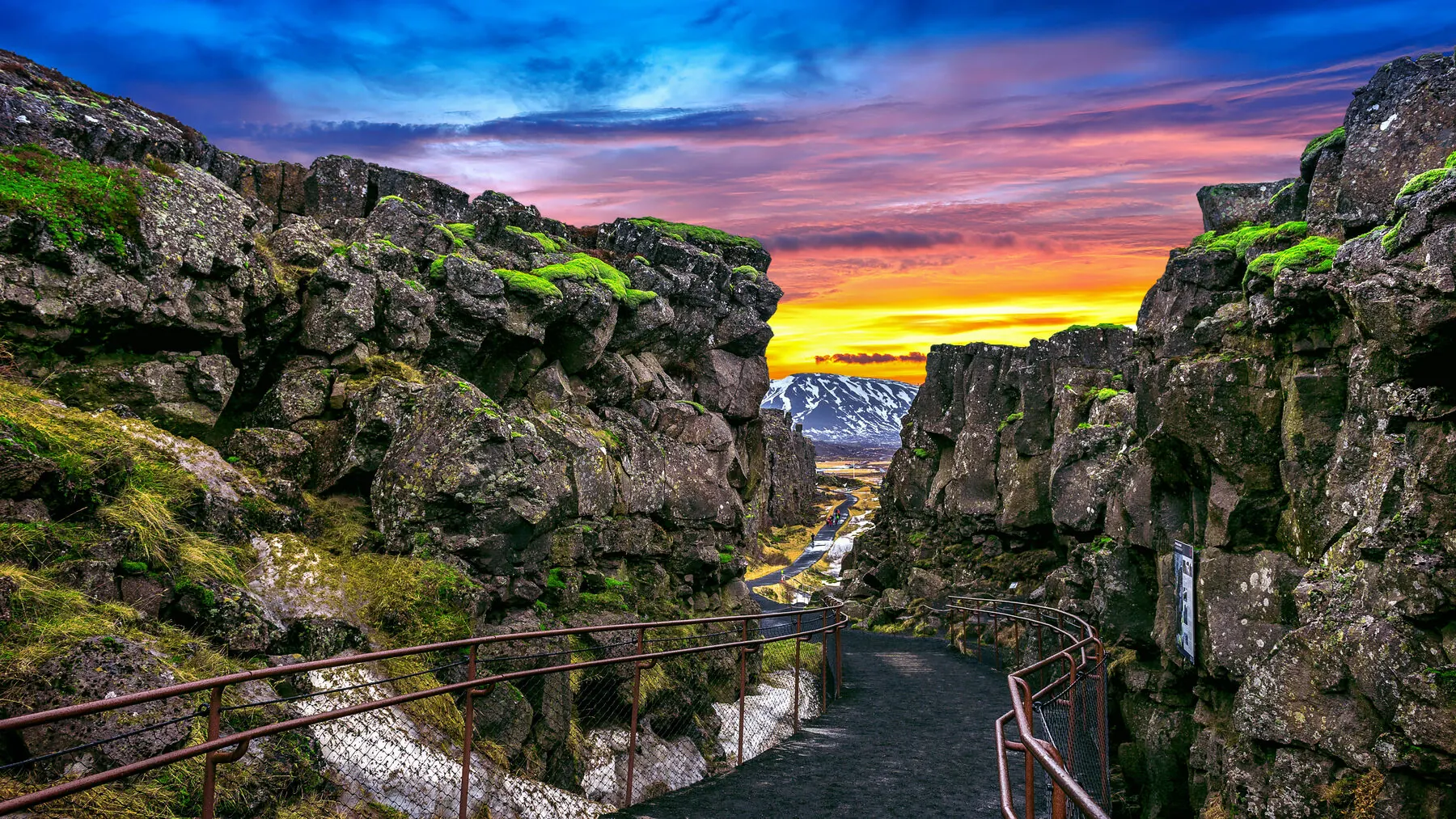
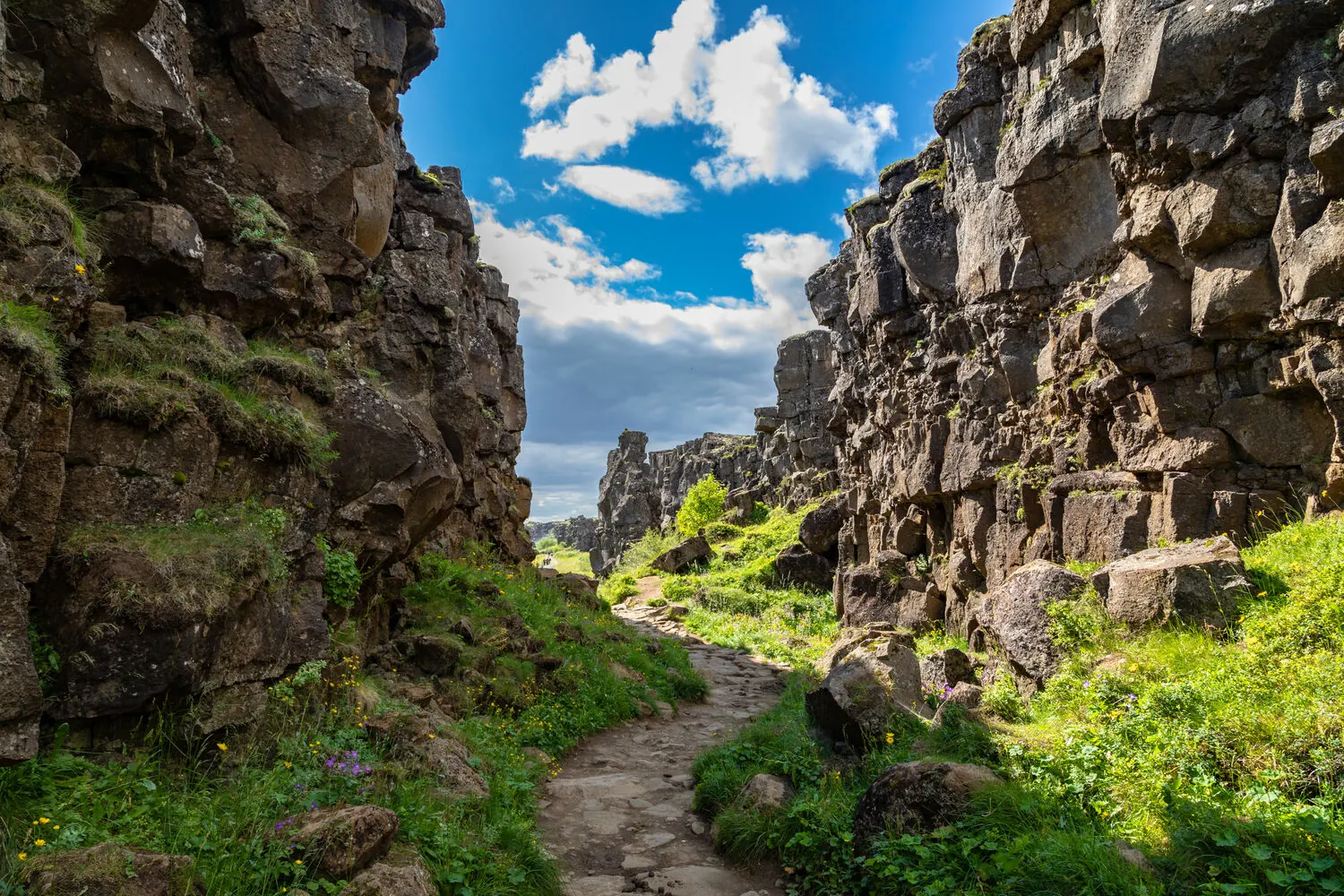
Þingvellir sits directly on the boundary between the North American and Eurasian tectonic plates, which have been drifting apart here at roughly 2 centimetres a year — about the rate a fingernail grows. It doesn't sound like much until you look at the numbers it adds up to: since lava last flowed through this seven-kilometre-wide valley, the ground has subsided around 40 metres and the rift has widened by roughly 70. The result is Almannagjá, the towering fissure wall that forms the valley's western edge, and a landscape of cracks, canyons and crystal-clear fissures — including Silfra, fed by glacial water so pure it's filtered through porous lava for decades before reaching the surface, and popular today for snorkelling literally between two continents.
The World's Oldest Parliament
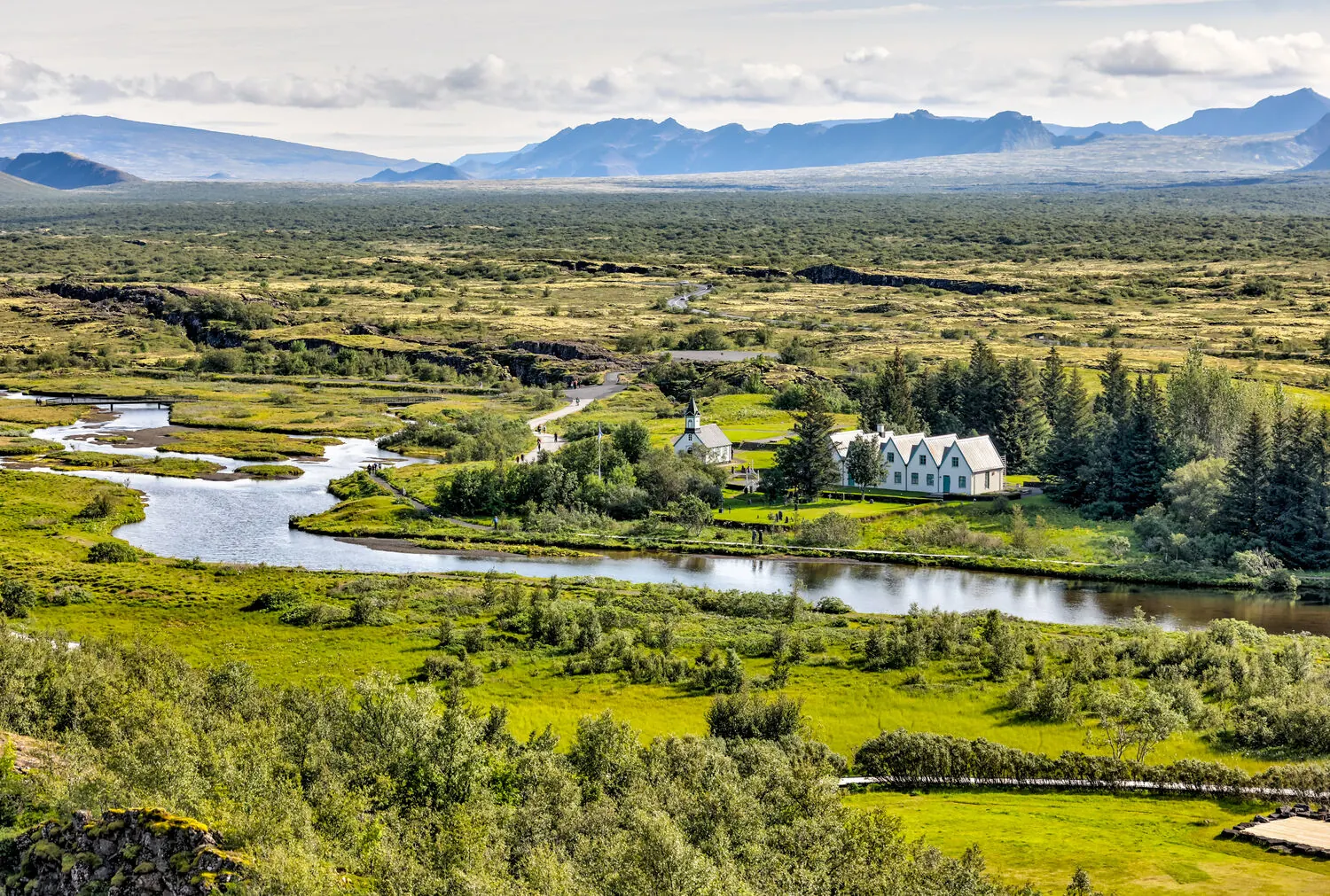
In 930 AD, Iceland's early settlers gathered here to found the Alþingi — a national assembly that would decide law and settle disputes for the entire island, making it the oldest parliamentary institution in the world. They chose this valley partly for its accessibility from the country's most populated regions and partly because the land had already been declared public. Each summer, chieftains and free farmers travelled from across Iceland to camp here for two weeks, and the Lögberg — the Law Rock — became the physical stage of the nation: a natural platform where the elected Lawspeaker recited the law aloud from memory, since almost nothing was written down. The Alþingi held both legislative and judicial power at Þingvellir until 1798, when it finally moved indoors, and eventually to Reykjavík in 1881, where it still sits today.
One Man's Decision, and a Nation Held Together
The valley's most consequential moment may have come in the year 1000. Iceland had split into two increasingly hostile factions — pagan and Christian — each with its own Lawspeaker, and the young Commonwealth was at real risk of civil war. In an extraordinary act of trust, both sides agreed to let a single man decide: Þorgeir Ljósvetningagoði, the pagan Lawspeaker himself. He withdrew alone for a full day and night, and when he returned to the Lögberg, he announced that Iceland would adopt Christianity as its official religion — while quietly permitting pagans to keep practising in private. It worked. Iceland converted without the wars that scarred so much of the rest of Europe during the same era, entirely on the strength of one ruling, delivered on this ground.
A River Moved on Purpose
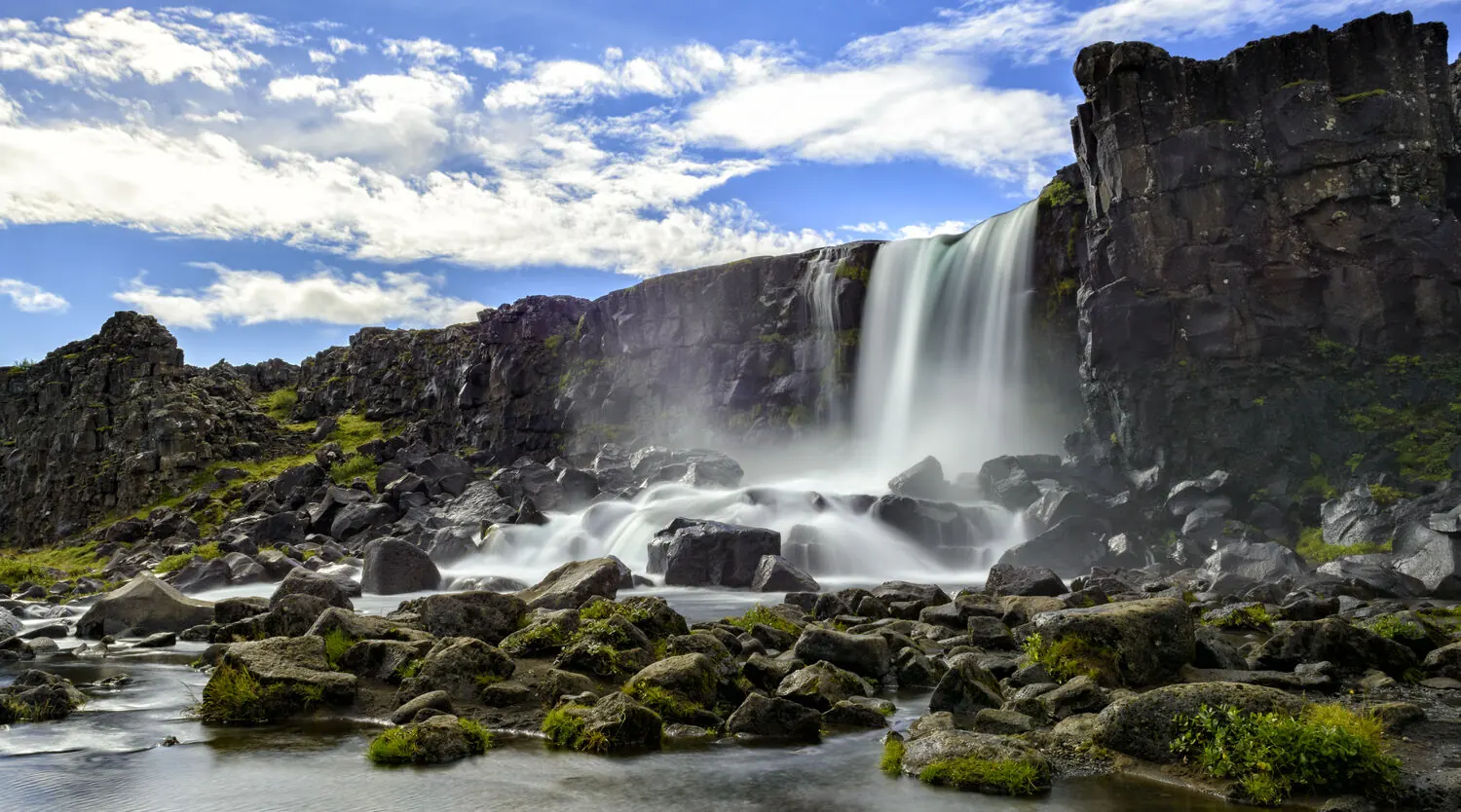
One of the park's most photographed features, Öxarárfoss, isn't natural at all — or at least, not in its current location. Around the 10th century, the Öxará river was deliberately diverted from its original course so that it would spill directly into the Almannagjá gorge, most likely to provide fresh water for the thousands gathering each summer for the assembly. It's a small detail that says a lot about how deliberately this whole site was shaped — not just chosen for its politics, but engineered, in a modest Viking-age way, to actually function as a gathering place.
A Darker Chapter, and a Nation Reborn
Þingvellir's judicial role had a harsher side too. Drekkingarhylur, a quiet pool beneath the waterfall, was used for centuries to execute women convicted of certain crimes by drowning, while men faced beheading or hanging elsewhere in the valley — practices that continued until Iceland's last execution in 1830. Roughly a century later, the same valley took on a very different symbolic weight: as Iceland moved toward full independence from Denmark, Þingvellir — already the nation's founding site — became the natural place to mark it, and on 17 June 1944, Iceland formally proclaimed itself an independent republic here. The valley that hosted the first parliament also hosted the birth of the modern state.
A nation founded on ground that is, quite literally, still coming apart.
Small Facts Worth Knowing
- The plates drift apart by about 2 centimetres a year — roughly the speed a fingernail grows, but multiplied over thousands of years it has torn the valley floor apart by tens of metres.
- The Alþingi is the oldest parliamentary institution in the world — founded here in 930 AD and still functioning today, though it moved to Reykjavík in 1881.
- Iceland converted to Christianity by a single man's decision — lawspeaker Þorgeir Ljósvetningagoði, in the year 1000, choosing peace over a split nation.
- Öxarárfoss is artificial — the river was rerouted into the gorge around the 10th century, most likely to supply water to the assembly.
- It became a UNESCO World Heritage Site in 2004 — recognised for its cultural and historical significance, not only its geology.
- The last execution here was in 1830— after which the practice was outlawed nationwide; the site's judicial role had run for roughly 900 years.
Before You Go
Þingvellir is a national park, not just a viewpoint, so give it more than a drive-by — the walk down through Almannagjá to the valley floor takes maybe 20 unhurried minutes and does more to explain the geology than any sign along the way. If you are travelling with a wetsuit already booked, Silfra is one of the very few places on earth where you can snorkel or dive between two tectonic plates in water you can see 100 metres through. And however you time it, take a moment at the Lögberg — for a country of under 400,000 people, remarkably little of its national identity happened anywhere else.
Þingvellir Is the First Stop on Our Golden Circle
Our Golden Circle Tour begins right here, with time to walk the rift valley before we continue on to Geysir and Gullfoss.
See the Golden Circle Tour →