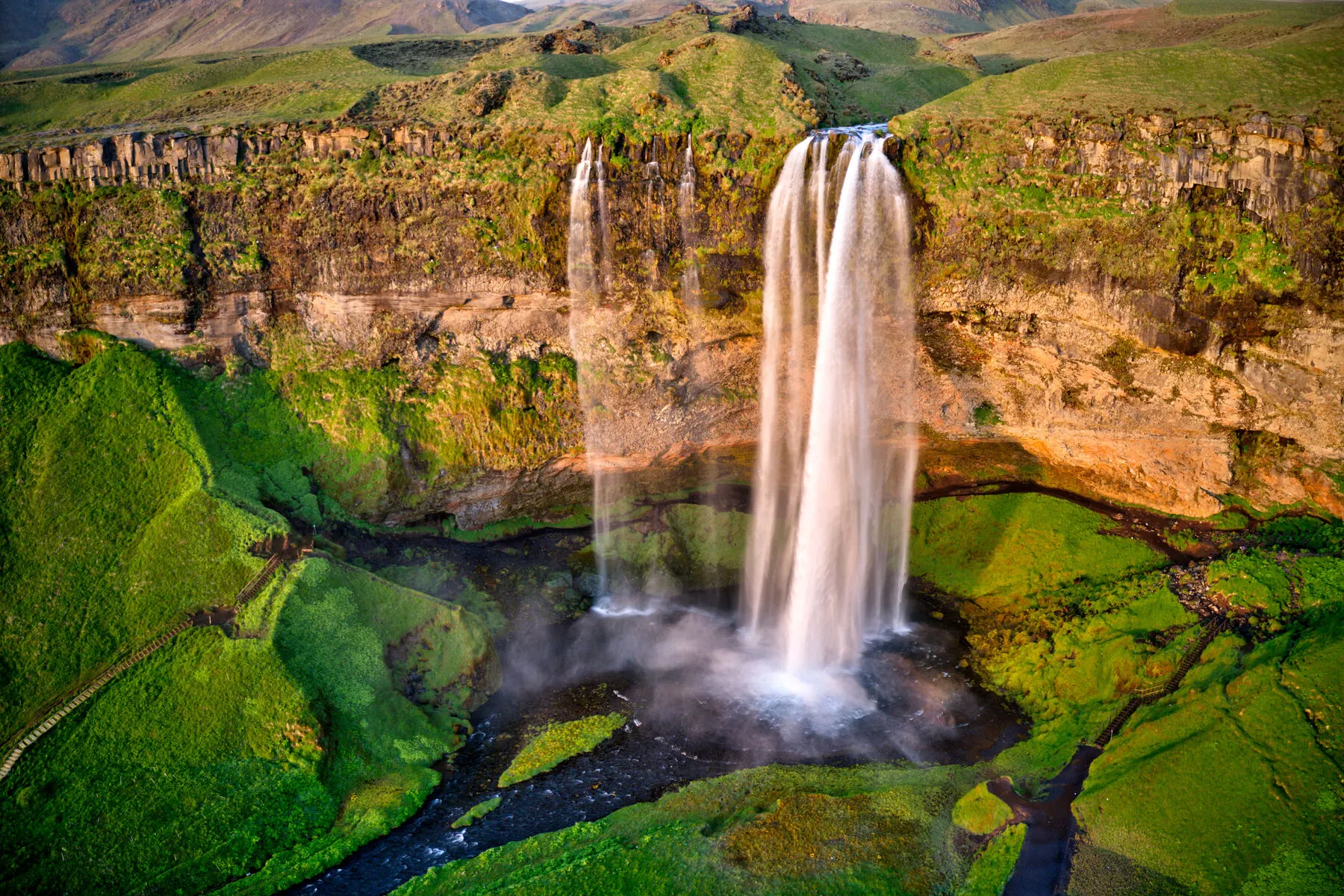
Seljalandsfoss: The Waterfall You Can Walk Behind
Most waterfalls are something you look at. Seljalandsfoss is something you walk into — a full loop of path circles behind the falling water itself, letting you see one of Iceland's most photographed landmarks from an angle almost nowhere else on the South Coast offers. It's a 60-metre curtain of glacial meltwater falling off what used to be the country's coastline, and it rewards patience: come at sunset, and the whole cliff face turns gold.
A Cliff That Used to Be the Coast
Seljalandsfoss falls from what was once a sea cliff, back when Iceland's coastline sat several kilometres further inland than it does today. As the sea retreated over thousands of years, it left this band of cliffs standing well above the current shore — riddled with the kind of small caves and overhangs that make walking behind a 60-metre waterfall possible in the first place. The water itself comes from Seljalandsá, a river fed by meltwater from Eyjafjallajökull, the ice-capped volcano that briefly grounded half of Europe's air traffic when it erupted in 2010. That glacial source means the falls run with a fairly steady volume year-round, swelling a little in the height of summer melt.
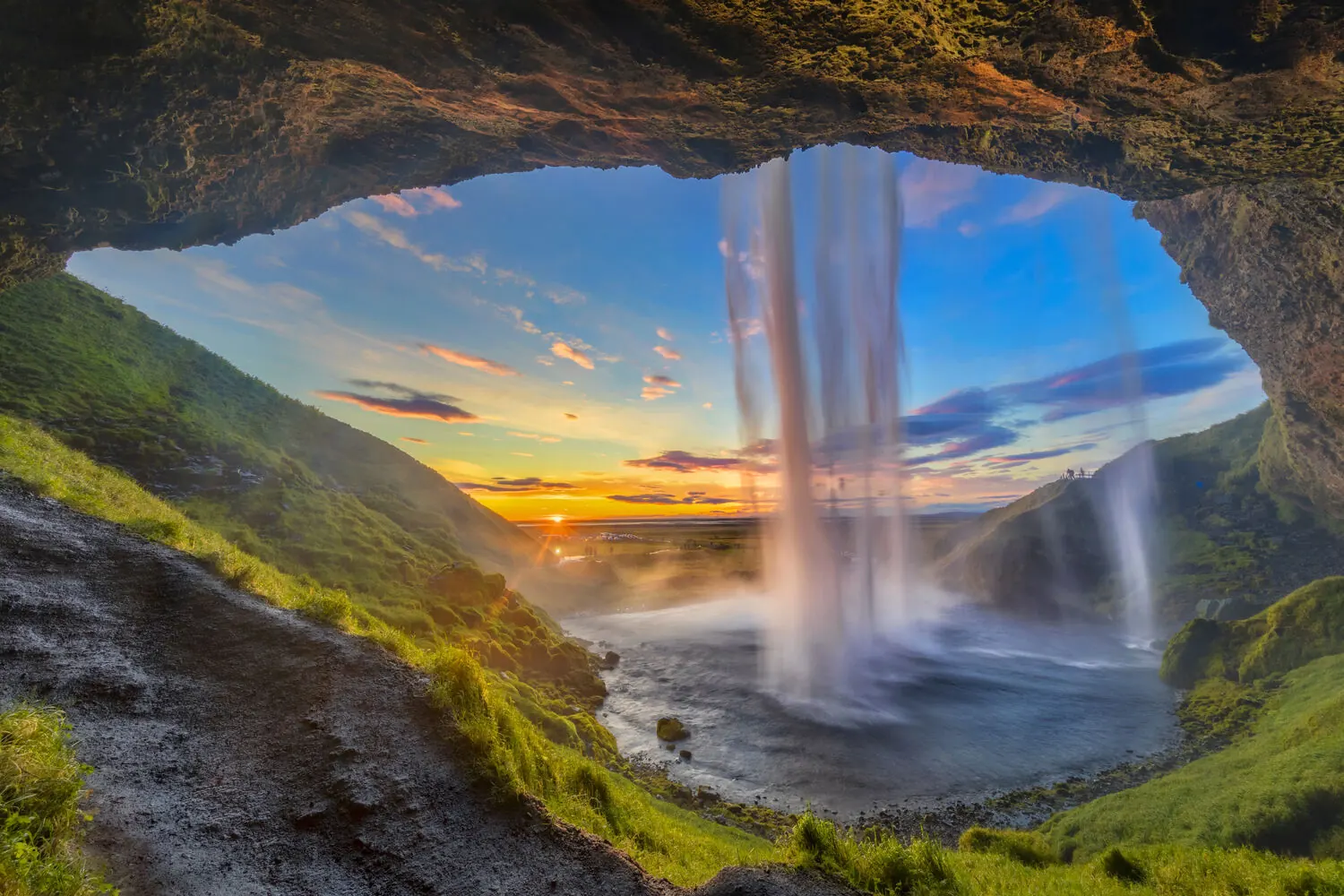
Walking Behind the Water
The path behind Seljalandsfoss is short, but it changes the entire experience of the place. Rather than standing in front of the falls like at almost every other waterfall in Iceland, you climb a short, sometimes slippery trail up and around, into a shallow cave carved into the cliff, and look back out through the falling water at the valley beyond. It's a genuinely different perspective — the light scatters and refracts through the curtain of water in a way that changes by the minute, and on a clear evening the low sun turns the whole scene into something closer to stained glass than rock and water. Bring something waterproof: the spray reaches the path from almost every angle, and wind carries it further than you'd expect.
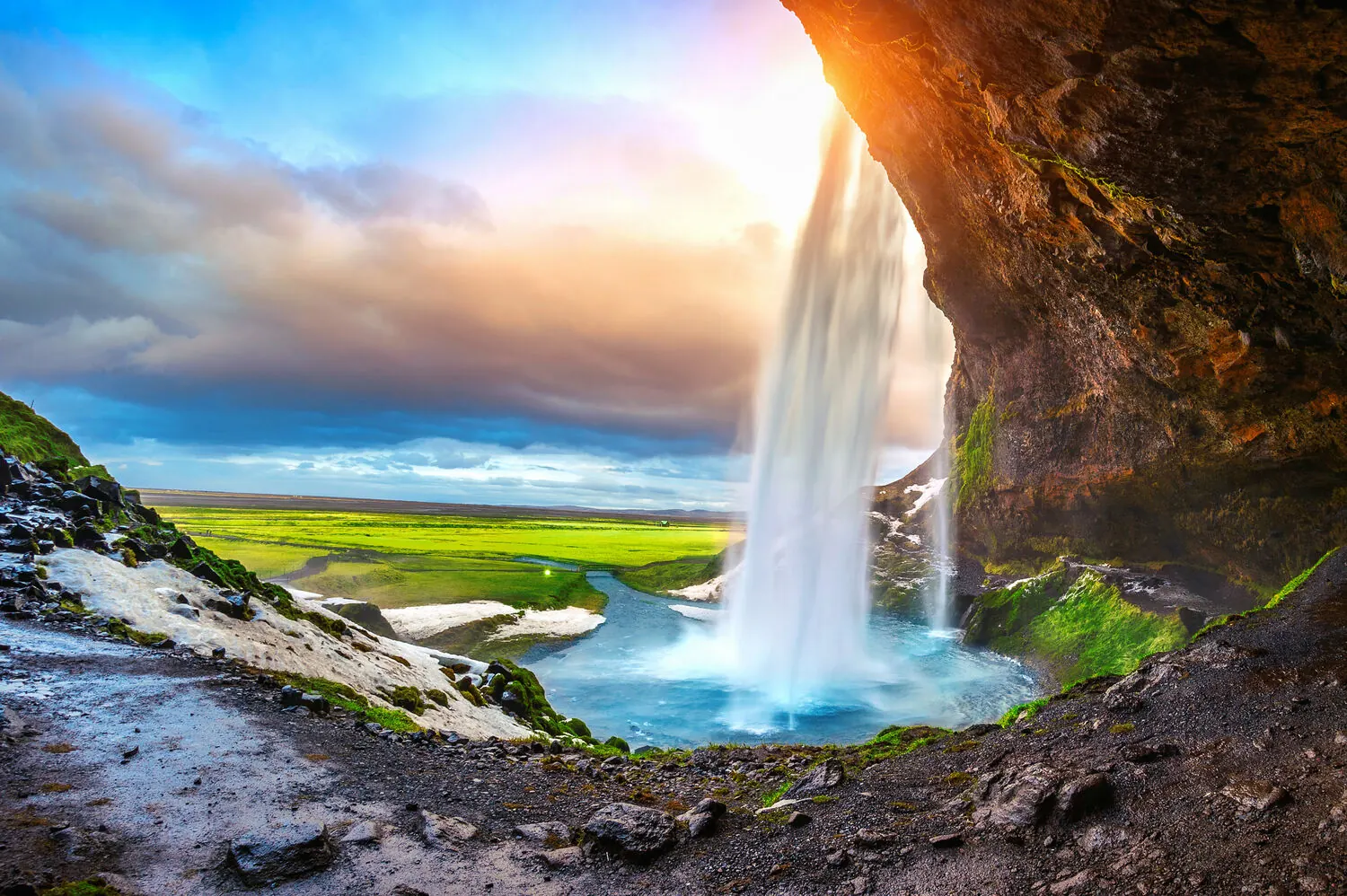
Sunset, and the Hidden Neighbour
Because the walking path faces roughly west, Seljalandsfoss is one of the rare Icelandic waterfalls where timing your visit around golden hour genuinely changes what you see, not just how it photographs — the low sun lights the spray from directly behind, and in winter the falls are illuminated after dark, making an evening visit worthwhile even outside the midnight-sun months. If you have a little more time, walk a few hundred metres further along the base of the same cliff to Gljúfrabúi, a second waterfall hidden almost entirely from view inside a narrow, mossy gorge — easy to miss, and worth the short detour for exactly that reason.
The one waterfall on the South Coast you don't just see — you walk all the way around it.
Small Facts Worth Knowing
- Seljalandsfoss drops about 60 metres— from a cliff that once formed part of Iceland's coastline, before the sea retreated and left the shore several kilometres away.
- It's one of the only waterfalls in Iceland you can walk fully behind — a path circles around the back of the curtain of water into a shallow cave.
- The river begins beneath a glacier — Seljalandsá is fed by meltwater from Eyjafjallajökull, the same ice cap that sits above the volcano of 2010 eruption fame.
- Expect to get wet— the spray reaches the walking path from most angles, more so with any wind, so waterproofs aren't optional here.
- It's lit after dark in winter — making it one of the few Icelandic waterfalls worth visiting after sunset, weather permitting.
- A second, hidden waterfall sits nearby — Gljúfrabúi, tucked behind a narrow gorge just a short walk up the same cliff face.
Before You Go
Waterproof footwear with real grip matters more here than almost anywhere else on the South Coast — the path behind the falls turns to slick mud and spray-soaked rock in wet weather, which is most weather. Pack a dry bag or cover for your camera, and expect the whole loop, including a stop at Gljúfrabúi, to take about 45 minutes at an easy pace.
Seljalandsfoss Is a Stop on Our South Coast Tour
Our South Coast Tour gives you real time behind the falls, with Skógafoss and Gljúfrabúi the same day.
See the South Coast Tour →