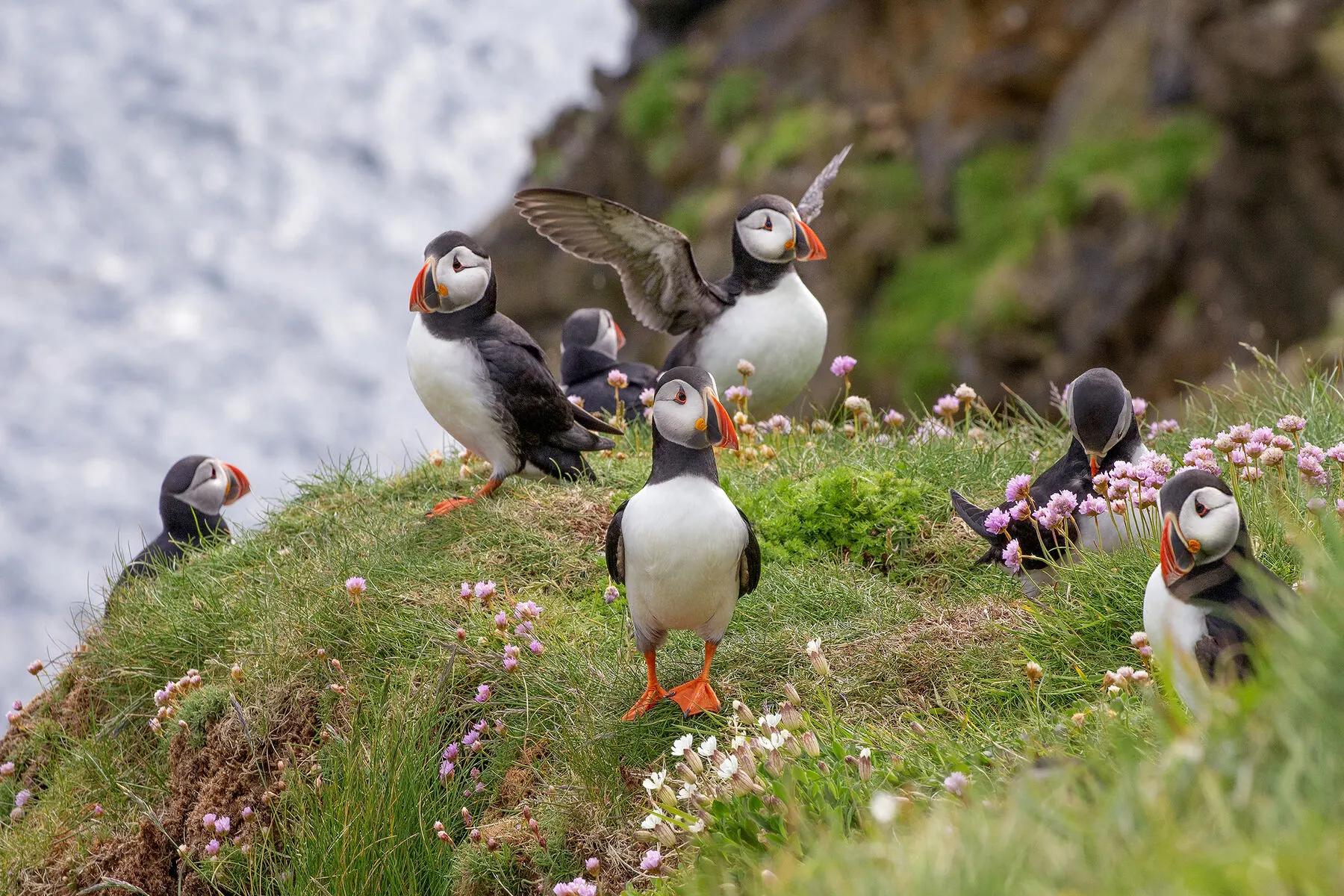
Meet the Prófastur: Iceland's Puffins, Properly Introduced
Icelanders have a nickname for the puffin: prófastur, "the dean" — a nod to its upright little walk and permanently solemn expression, as if it's about to deliver a sermon. The Icelandic word for the bird itself is simply lundi, and from late spring through summer, millions of them arrive on Iceland's coastal cliffs to do the same two things every puffin has done for millennia: find their old partner, and raise one chick in a burrow they've probably used before. Here's what makes them worth a closer look.
A Small Bird With Serious Engineering
An Atlantic puffin weighs about as much as a can of soda — roughly 400 grams — and stands barely 20 centimetres tall, yet it's built to do something very few birds manage well: fly and swim equally seriously. Those short, stiff wings beat around 400 times a minute to keep the bird airborne at speeds of up to 80 km/h, but the same wings double as flippers underwater, driving the puffin down to depths of over 60 metres as it chases sandeels and herring. Between the two extremes, take-off is famously the hard part — watching one waddle to a cliff edge and half-fall into flight is one of the more endearing sights on the Icelandic coast.
A Beak Built to Carry Lunch for Everyone
That bright, triangular bill isn't just for show — it's a fish-carrying tool. Spiny, backward-facing barbs on the roof of the puffin's mouth and a rough tongue let it grip one fish while catching the next, so a single puffin can return from a dive holding ten or more small fish crosswise in its bill at once, all without dropping the first catch. Multiply that by however many trips it takes to feed a hungry chick in a burrow, and it becomes clear why puffins spend so much of the summer at sea. The bill's famous orange-and-grey colouring is seasonal, too — it grows brighter for the breeding months and the outer plates are shed once the season ends, leaving a duller, smaller bill for winter.
The Same Partner, the Same Burrow
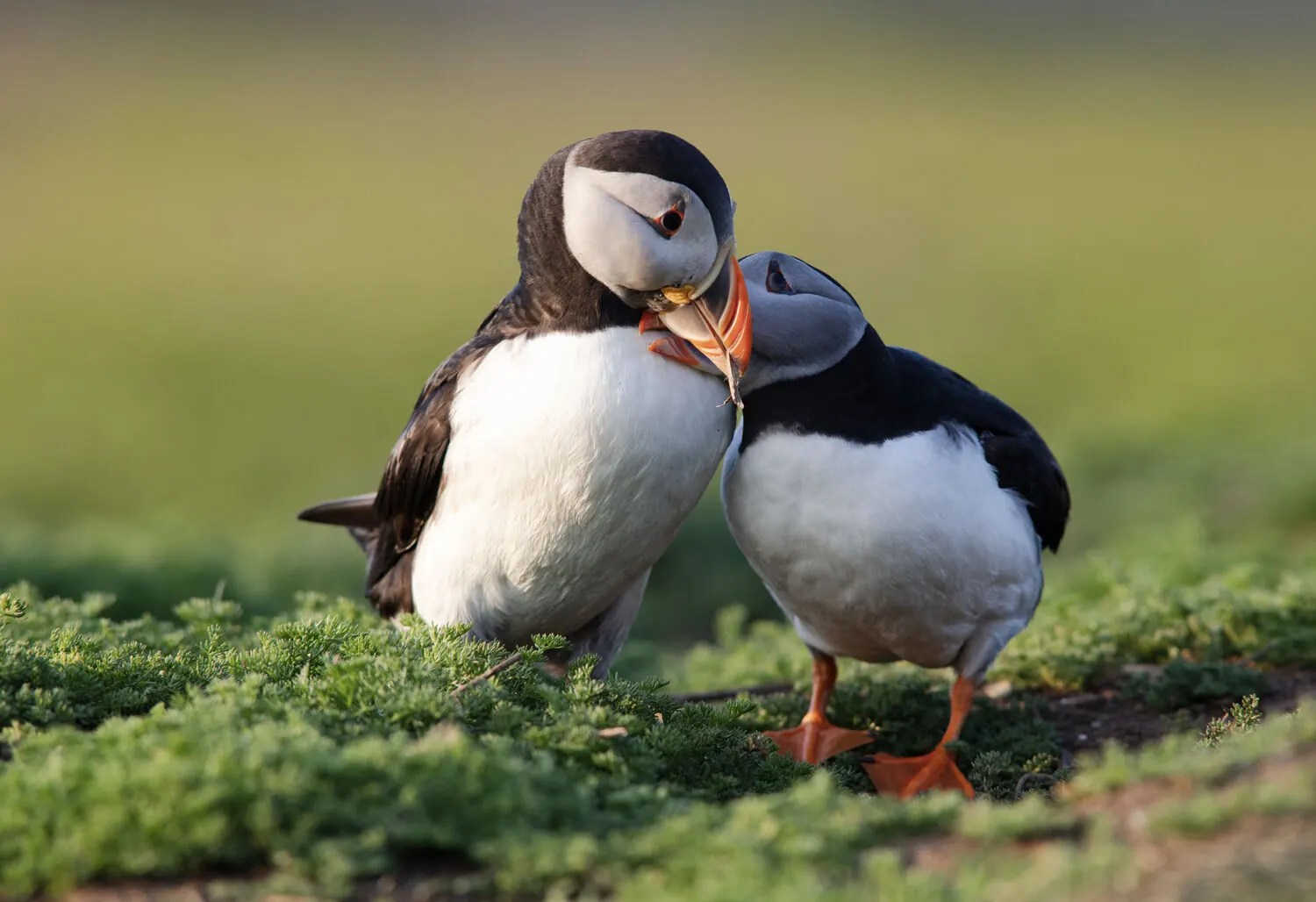
Puffins are largely monogamous, and pairs will often reunite at the very same nesting site year after year, digging out and reusing the same burrow — sometimes over a metre deep into the turf of a cliff top. A single egg is laid each season, and both parents take turns incubating it for around six weeks. Once the chick, known as a puffling, hatches, it stays hidden in the dark of the burrow for six to seven weeks, fed almost entirely on the small fish its parents ferry in, until one night it leaves on its own — usually under cover of darkness, heading straight out to open water it won't really leave again until it returns to breed, several years later.
The Puffling Patrol
On Heimaey, the main island of the Westman Islands archipelago off Iceland's south coast, that first flight doesn't always go to plan. Fledgling pufflings navigate by moonlight over open water, and the town's streetlights can throw young, disoriented birds off course, leading them to land in town instead of the sea. Every August and September, local children take up flashlights and cardboard boxes for the "puffling patrol" — a decades-old community tradition of rounding up grounded pufflings from streets and gardens and releasing them safely from the cliffs the following morning. It has become one of the most charming pieces of local culture connected to the bird, and a genuine conservation effort in its own right.
Where and When to Find Them
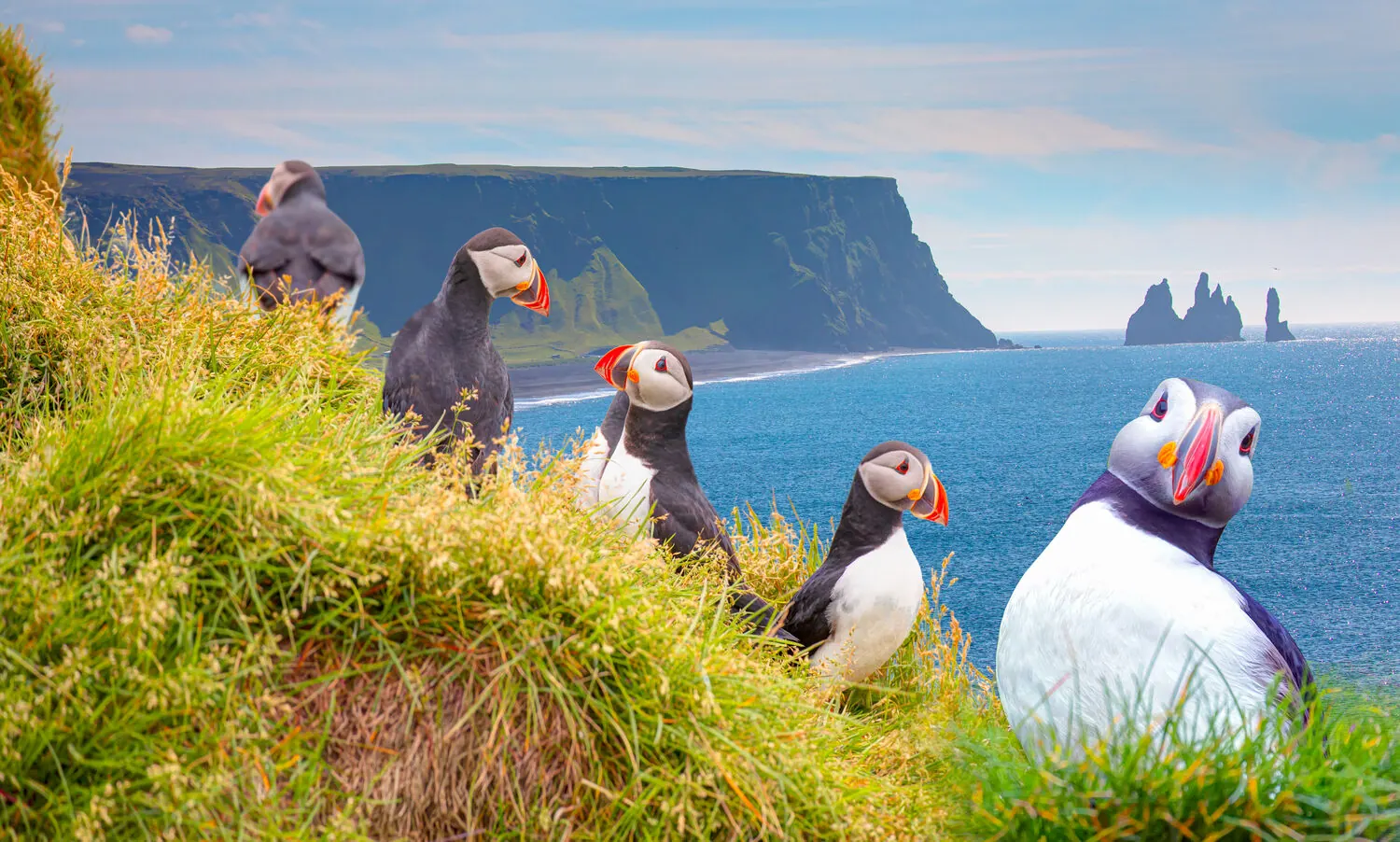
Puffins spend around eight months of the year alone on the open Atlantic, coming ashore only to breed — which means the viewing window in Iceland runs roughly from late April to August, with the colonies busiest from May through mid-August before the birds head back out to sea. The Westman Islands are home to one of the largest colonies in the world and are widely considered the single best place to see them up close. Along the mainland, Látrabjarg in the Westfjords — Iceland's largest bird cliff — and Borgarfjörður eystri in the East Fjords are both well-known for puffins that nest close enough to observe without disturbing them. Closer to Reykjavík, the cliffs along the South Coast near Vík and Dyrhólaey host smaller colonies too, making a puffin sighting a realistic bonus on a South Coast day tour during the season.
Eight months alone on the open Atlantic, then home to the exact same cliff — and often the exact same mate.
Small Facts Worth Knowing
- They can live 20 years or more — a surprising lifespan for a bird small enough to fit in two hands.
- One egg, once a year — both parents share incubation duty for around 6 weeks before it hatches.
- Wings built for two jobs — roughly 400 beats a minute in the air, and the same wings work as flippers underwater.
- They dive far deeper than you'd guess — over 60 metres in pursuit of small fish like sandeels and herring.
- Their bill fades every winter — the bright orange plates are shed after breeding season and regrown each spring.
- Iceland holds a huge share of the world's Atlantic puffins — which is largely why the species is considered Vulnerable: what happens here matters for the whole population.
Before You Go Looking
Puffins nest on grassy cliff tops that can crumble closer to the edge than they appear — keep a respectful distance both for your own safety and so you don't disturb a burrow. Bring the longest lens or zoom you have; the birds are approachable but still wild, and the best photographs come from patience rather than proximity. And if your trip falls outside the late April–August window, don't be too disappointed — it just means the colonies are having their eight months of peace at sea, which is exactly how a healthy puffin summer is supposed to end.
Puffin Cliffs Are Part of the Route
Our South Coast Tour passes close to the cliffs near Vík and Dyrhólaey — during puffin season, keep an eye on the grassy ledges as we go.
See the South Coast Tour →