Hiking in Iceland: From Sunset Ridges to Glacier Ice
Iceland doesn't really have one kind of hike. On the same trip you could take a half-hour walk above a fishing town at sunset, and two days later find yourself roped to a stranger, crampons on, crossing a glacier that's older than written history. Both count as hiking here, and both need a slightly different kind of preparation. This is what actually separates an easy afternoon trail from something you book a guide for — and how to tell which is which before you commit to either.
Day Hikes: The Easiest Way to Feel Like You've Earned the View
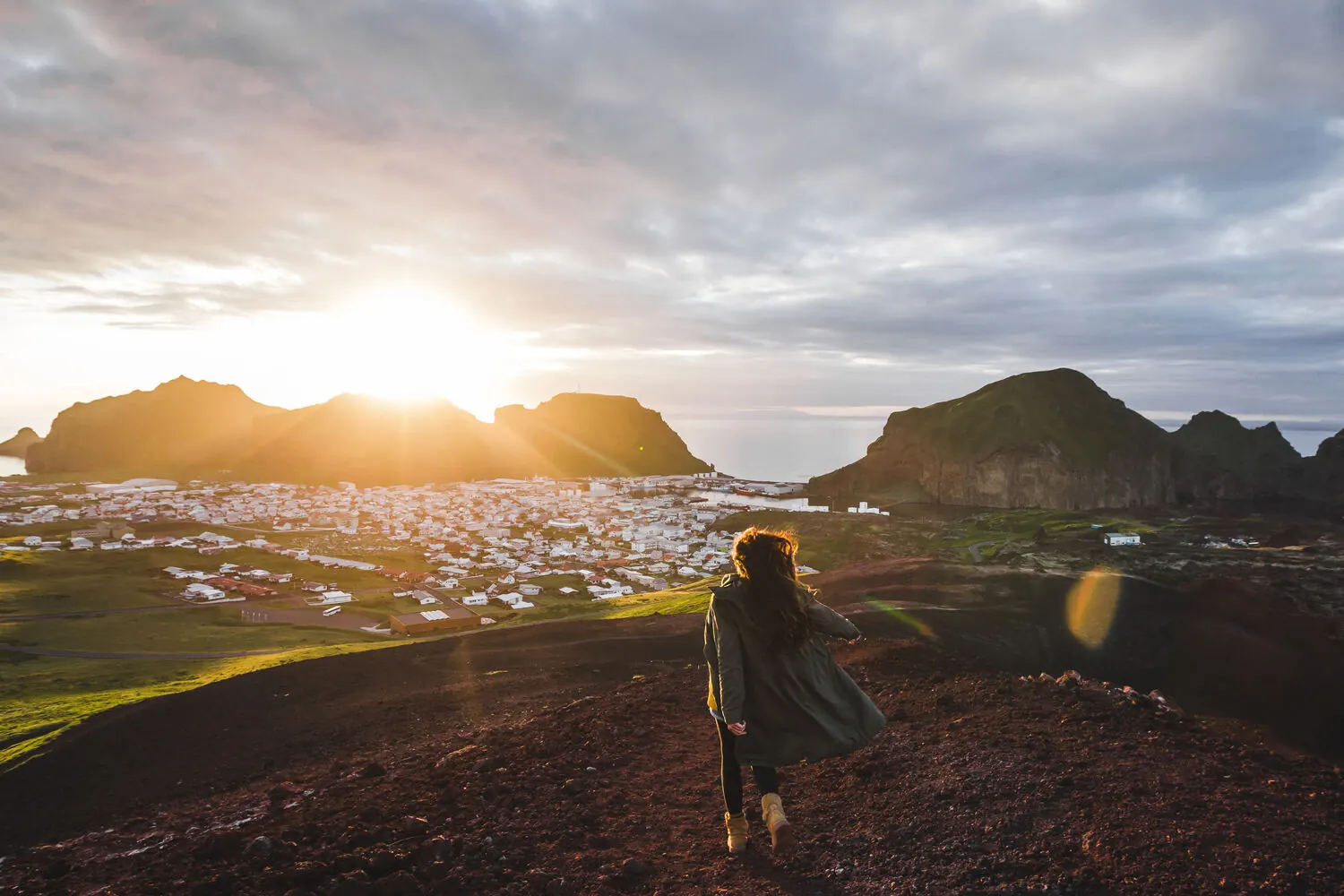
Not every hike in Iceland requires planning, gear, or a guide. Short, well-marked trails sit right next to some of the country's biggest sights — a walk up to Kerið's rim, along the ridge above Reynisfjara, or onto Eldfell, the young volcano on Heimaey that erupted in 1973 and reshaped the island in a matter of weeks. The Eldfell climb takes under an hour each way, follows a clear path over cooled lava, and rewards you with one of the best sunset views in the Westman Islands — the whole fishing town laid out below, ringed by cliffs on three sides. These are the hikes worth doing even if hiking isn't really your thing.
The Highlands: Iceland's Serious Trekking Country
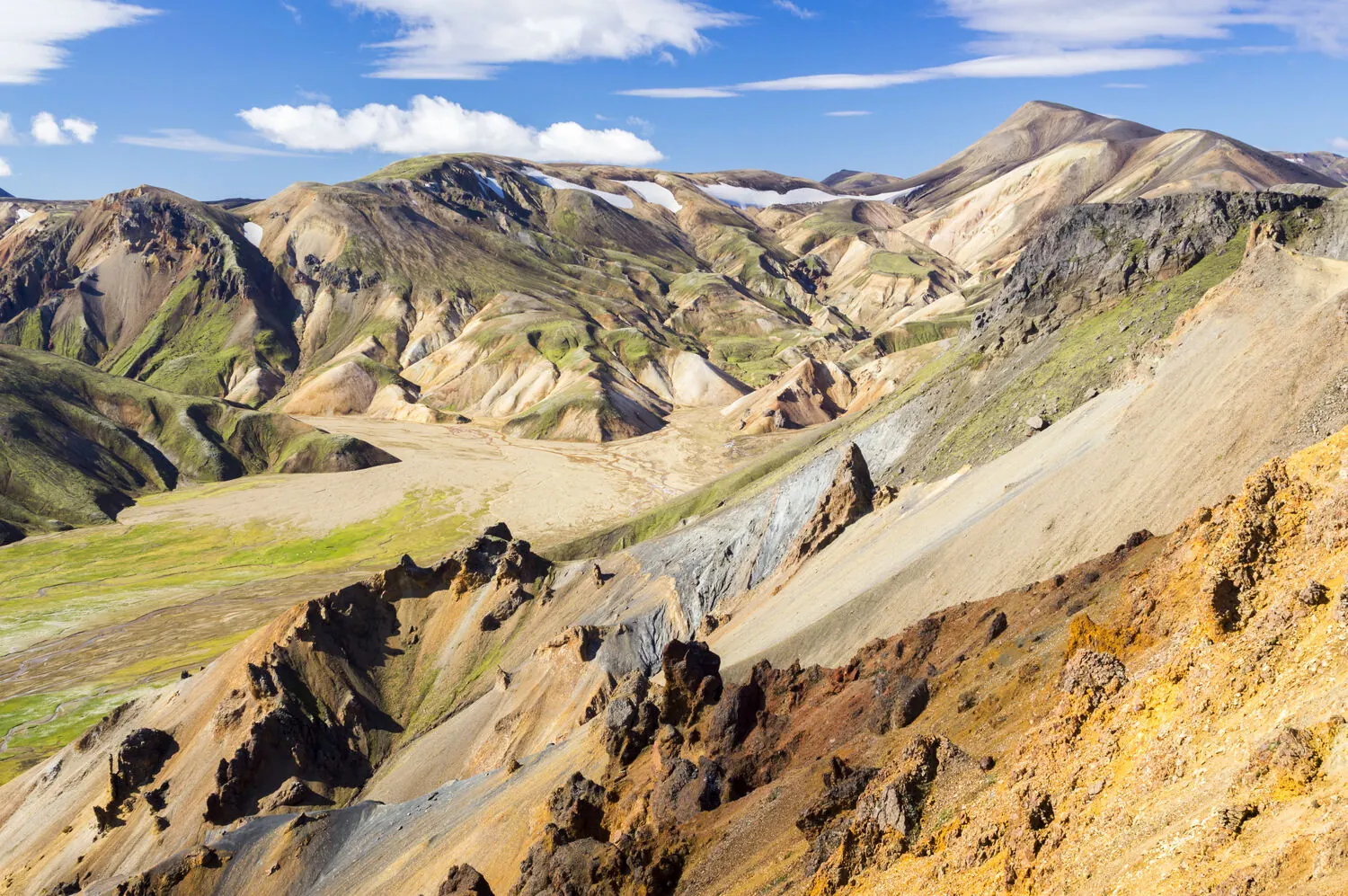
Landmannalaugar is where Iceland's hiking reputation actually comes from — a highland valley of rhyolite mountains striped in rust, gold, moss green, and ash grey, sitting at the start of the Laugavegur Trail, one of the most famous multi-day treks in the world. The full route runs roughly 55 km over four days to Þórsmörk, staying in mountain huts that need booking well ahead of peak season. You don't have to commit to all four days to see why people rave about it — even a half-day loop from Landmannalaugar itself, through the same colored peaks and steaming ground, gives a real sense of the terrain. This is genuine backcountry, though: exposed, weather-dependent, and only accessible via F-roads that open for a few months each summer.
Glacier Hiking: The One Kind of Hike You Don't Do Alone
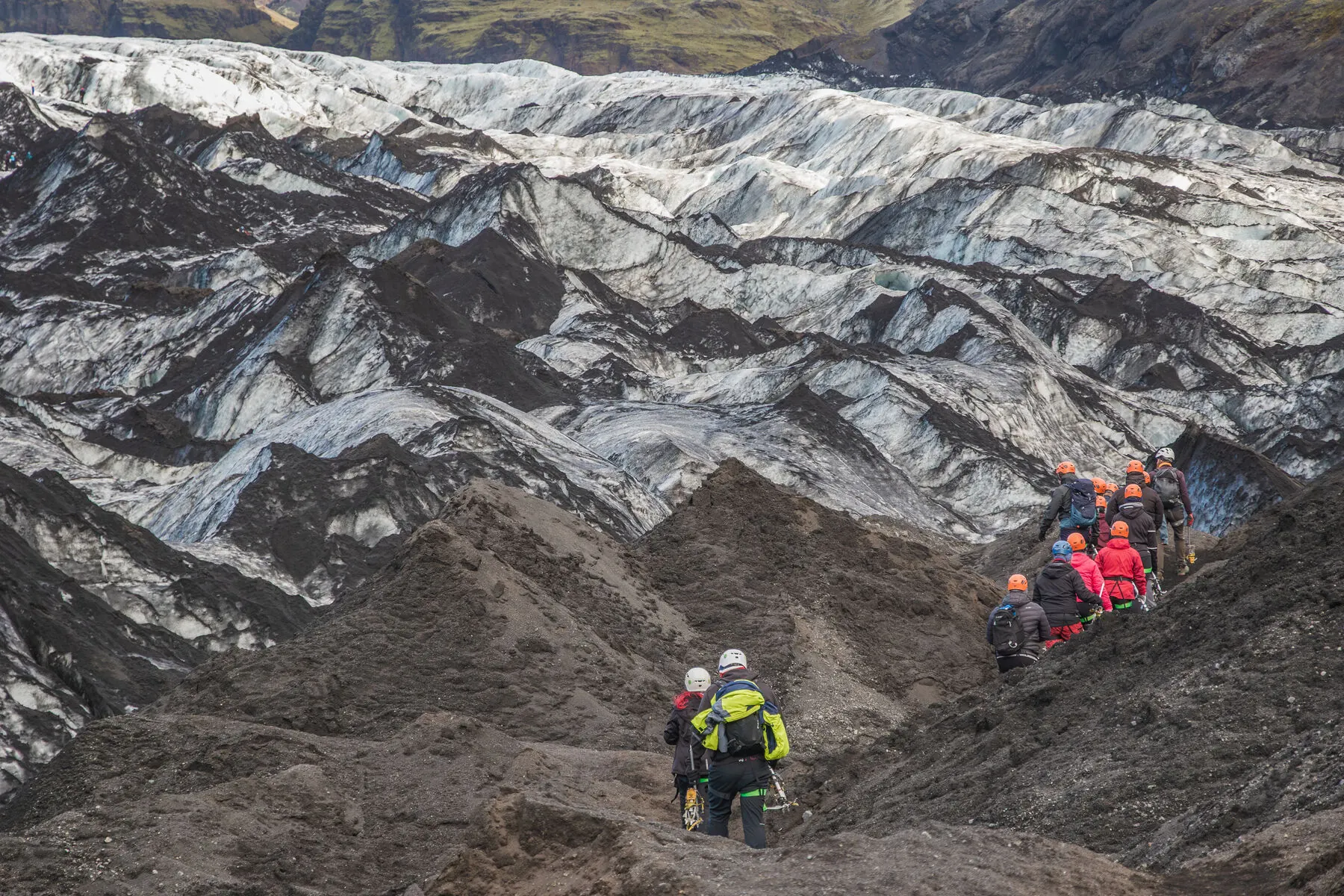
Walking on a glacier looks straightforward from a photo and isn't, which is exactly why it's the one type of hiking in Iceland almost nobody attempts without a guide. Crevasses — deep cracks in the ice — are often hidden under thin snow bridges that look completely solid from above. Guided glacier hikes fit you with crampons, an ice axe, and a harness for the sections where the group ropes together, and the guide reads the ice in a way a first-time visitor simply can't. It's also, for what it's worth, one of the more memorable few hours you can spend outdoors anywhere — walking across compressed snow that fell before most of recorded history, past streaks of black volcanic ash folded into blue-white ice.
The same trip can hold an easy sunset walk and a roped glacier crossing. Knowing which is which is most of the preparation.
Small Facts Worth Knowing
- Glacier hiking is guided by law in practice, not just recommendation — glaciers hide moving crevasses under snow bridges that are invisible from the surface, and reputable operators won't take you on the ice without crampons, a harness on rope sections, and a certified guide.
- The Laugavegur Trail runs about 55 km over 4 days — Landmannalaugar to Þórsmörk, through rhyolite mountains, black desert, and a glacial river valley, usually done hut-to-hut.
- Iceland's hiking season is short: late June to early September — outside that window, huts close, rivers run higher and colder, and daylight and weather both turn unpredictable fast.
- Weather can shift an easy hike into a hard one within the hour — checking safetravel.is before setting out, even for a short trail, is standard practice here, not overcaution.
- Landmannalaugar's mountains are colored by geothermal minerals, not paint — the rust, gold, and green bands are rhyolite reacting with heat and moisture, which is why no two photos of it look quite the same.
- Eldfell, on Heimaey, is barely 50 years old — it erupted in 1973 and buried part of the town; the short hike to its summit crosses cooled lava that's still warm a few centimetres down in places.
- Mountain huts on multi-day routes need booking well in advance — popular routes like Laugavegur sell out huts months ahead for peak summer weeks.
- "Every-day-hikeable" and "needs a guide" are both common in Iceland, often an hour apart — a marked trail near a town and a roped glacier crossing can both be on the day's itinerary without contradiction.
Before You Go
Match the hike to the day: sturdy shoes and a rain layer cover most short, marked trails near towns and tour sites. Anything highland, multi-day, or on ice is a different category — proper boots, layered clothing regardless of season, and for glaciers specifically, a guide and their gear rather than your own. Check safetravel.is before any hike longer than an hour, even ones that look easy on the map.
Glacier Walks Are Part of Our South Coast Days
Crampons, harnesses, and a certified guide included — see the ice up close without arranging any of the equipment yourself.
See the South Coast Tour →