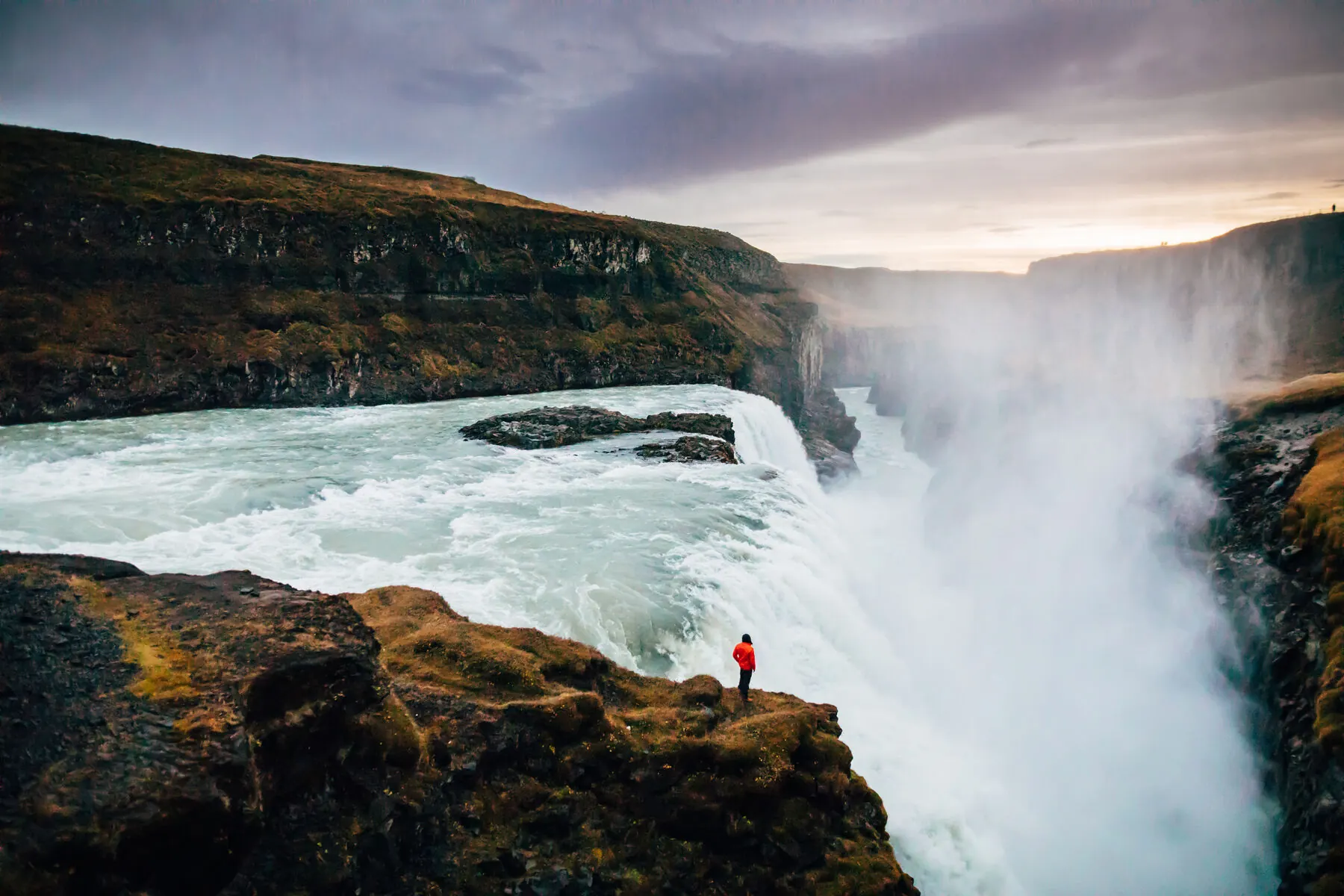
Gullfoss: The Waterfall a Farmer's Daughter Saved
Gullfoss is the waterfall that named the Golden Circle, and it very nearly wasn't here to see. In the early 1900s, a hydroelectric scheme threatened to submerge it entirely — and it survived largely because of one farmer's daughter who refused to let that happen, using nothing but persistence, a very long walk, and a threat nobody quite dared call her bluff on.
A Two-Stage Drop, Fed by a Glacier
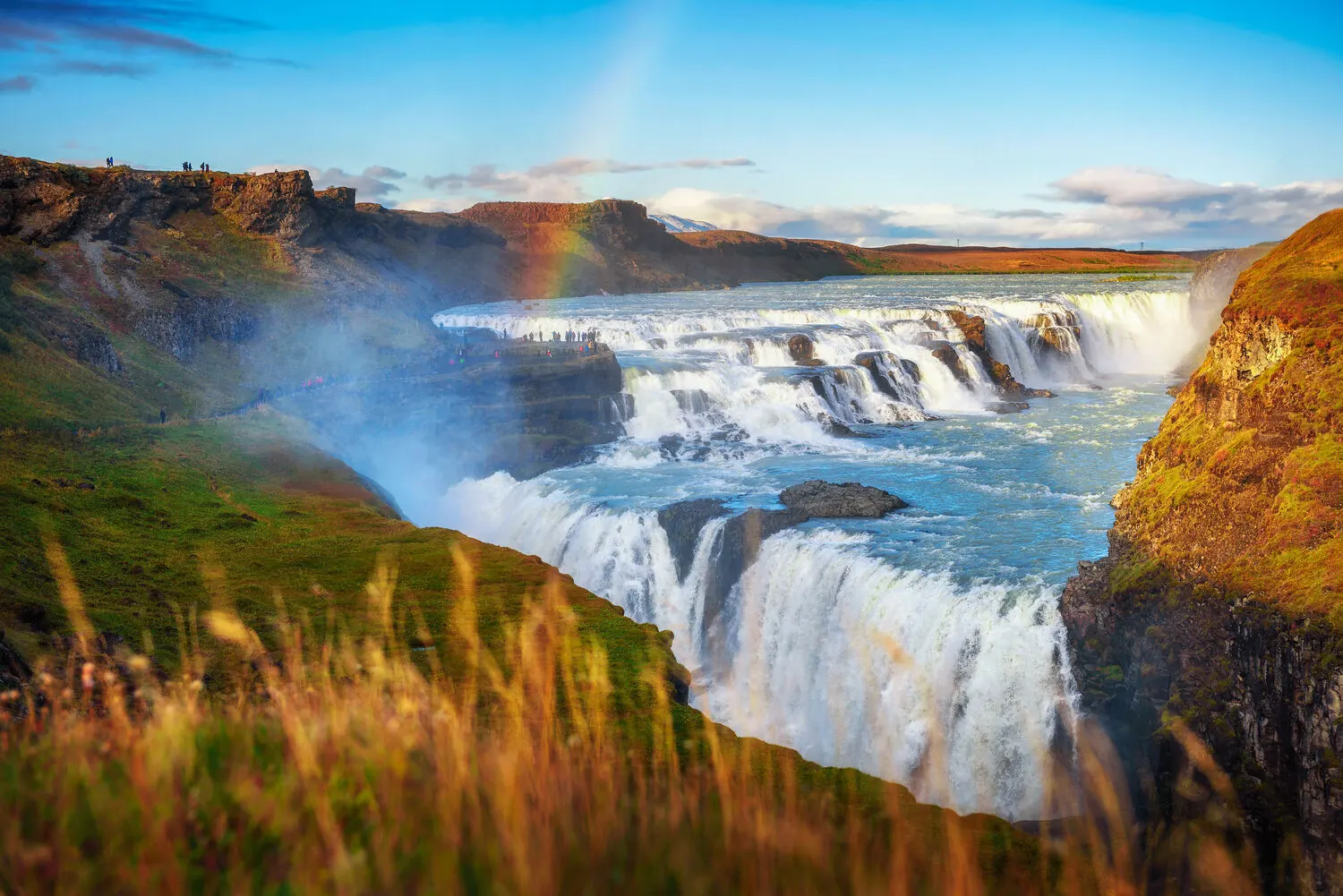
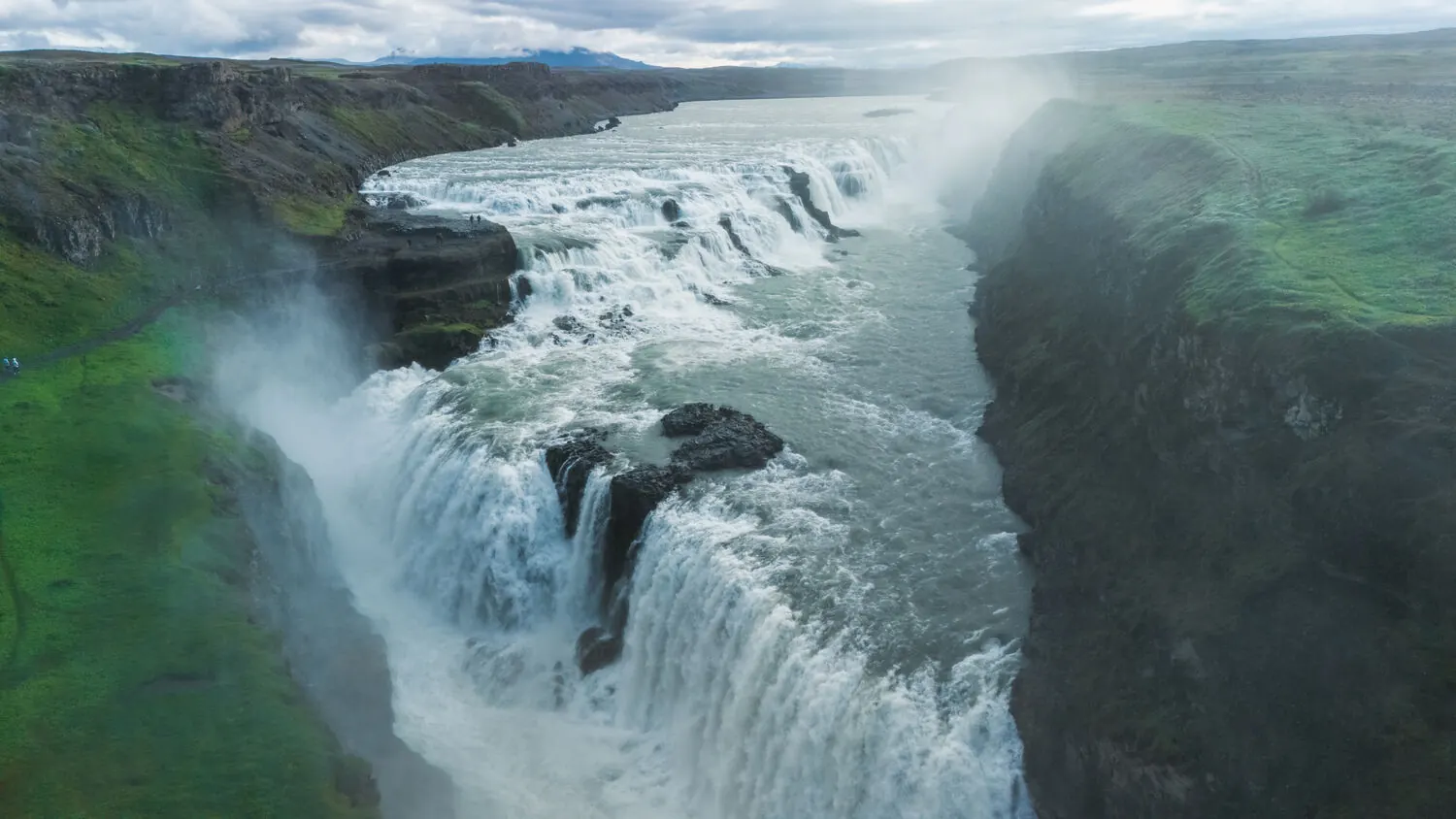
The Hvítá River begins its life as meltwater from Langjökull, Iceland's second-largest ice cap, and by the time it reaches this stretch of canyon it has built up serious force. At Gullfoss, the river drops in two distinct stages — first a shorter fall, then a sharper second drop — for a combined descent of about 32 metres into a rugged gorge carved from the surrounding basalt. On a sunny day, the spray throws up a rainbow that arcs directly over the falls, and it's this golden, sunlit haze — rather than any particular mineral in the water — that gave the falls their name: Gullfoss, "Golden Falls."
The Dam That Almost Was
In 1907, the landowners around Gullfoss — including the father of a young woman named Sigríður Tómasdóttir, who had grown up on the family farm at Brattholt guiding visitors to the falls — agreed to lease the river to foreign investors for a hydroelectric dam. Built as proposed, it would have drowned Gullfoss beneath a reservoir. Sigríður, who had no formal schooling but a fierce attachment to the waterfall she'd grown up beside, refused to accept it. She filed legal challenges against the lease, organised opposition among her neighbours, and — without any of the transport options that exist today — made the roughly 120-kilometre journey to Reykjavík on foot more than once to petition the government directly. She is said to have threatened to throw herself into the falls if the dam went ahead, a statement no one who knew her seemed willing to test.
A Case Lost, and a Waterfall Won Anyway
Sigríður's legal case was represented by a young lawyer named Sveinn Björnsson, who would go on to become Iceland's first president. In the courts, her side technically lost. But the public attention her campaign generated made the project increasingly unpopular, and the developers ultimately failed to make the required lease payments — the contracts were cancelled, and the dam was never built. Gullfoss flowed on undisturbed, and in 1979, the site received formal protected status as a conservation area, decades after Sigríður's death in 1957. A statue by sculptor Ríkarður Jónsson now stands near the falls in her memory, and she is widely regarded today as Iceland's first environmentalist — someone who fought to save a landscape rather than develop it, at a time when almost no one else was making that argument.
A farmer's daughter with no legal training, a losing court case, and a waterfall that's still here because of her anyway.
Small Facts Worth Knowing
- Gullfoss drops a combined 32 metres— in two stages, fed by the glacial Hvítá River carrying meltwater from Langjökull, Iceland's second-largest ice cap.
- "Gullfoss" means "Golden Falls" — and lends its name to the entire Golden Circle route.
- Sigríður walked roughly 120 kilometres to Reykjavík — on foot, more than once, to petition against the dam that would have submerged the falls.
- Her lawyer became Iceland's first president— Sveinn Björnsson represented her case, years before taking the country's highest office.
- The dam was never built — the lease contracts were cancelled, and Gullfoss was formally protected as a conservation area in 1979.
- Sigríður is remembered as Iceland's first environmentalist — a statue by sculptor Ríkarður Jónsson stands near the falls in her honour.
Before You Go
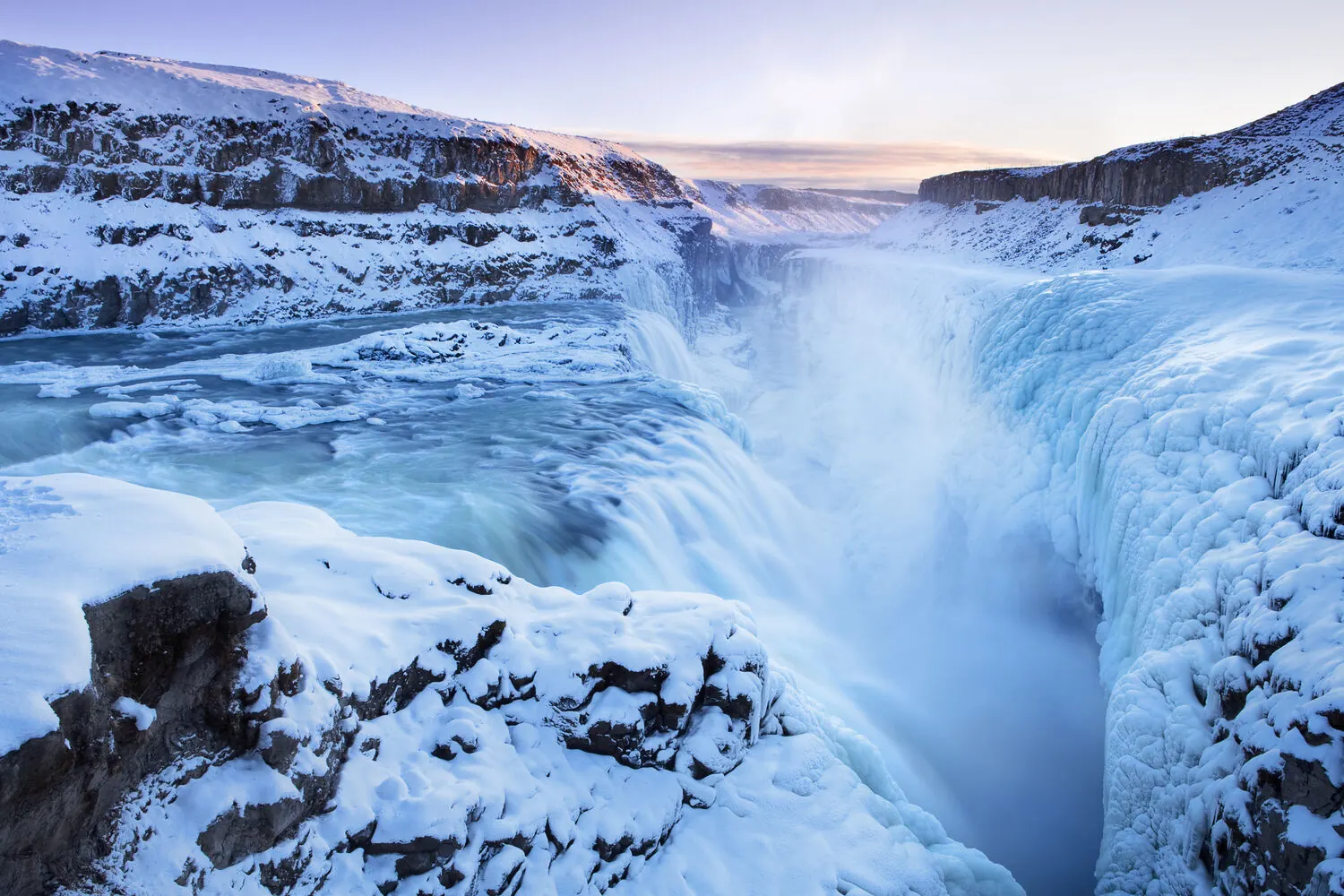
Well-placed viewing platforms let you take in the full two-tiered drop from above, but the path closer to the water rewards the short walk down — expect to get lightly misted on a breezy day, more so if you get close to the lower platform. Gullfoss runs year-round and looks genuinely different each season: a thunderous wall of glacial water in summer, a half-frozen sculpture of ice in the depths of winter. Neither version disappoints.
Gullfoss Is the Third Stop on Our Golden Circle
Our Golden Circle Tour gives you real time at the falls — both viewing platforms, any season.
See the Golden Circle Tour →