Geysir: The Spring That Named Every Geyser on Earth
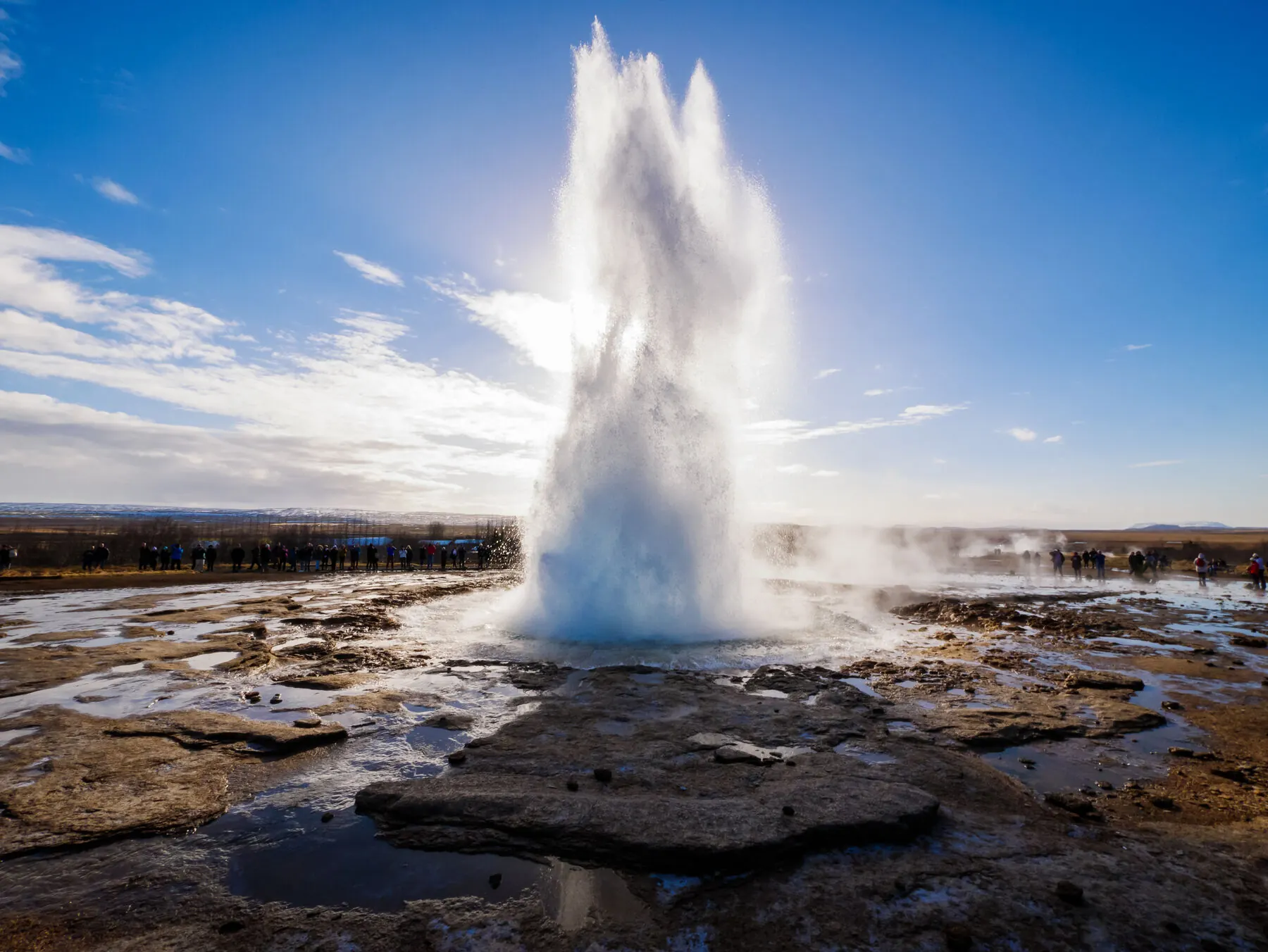
Every geyser on the planet — in Yellowstone, in Chile, in New Zealand — is named after one spring in a quiet Icelandic valley called Haukadalur. The Great Geysir gave English its word for the phenomenon centuries ago, and while the original spring barely stirs today, its neighbour Strokkur puts on one of the most reliable shows in Iceland, erupting every few minutes like clockwork.
The Spring That Gave Its Name to the World
The word geysir comes from the Icelandic verb geysa, meaning "to gush," and it stuck so thoroughly that English adopted it directly — every hot spring on earth that erupts on a cycle is now called a geyser, all tracing back to this one valley. The Great Geysir itself is believed to have started erupting after a major earthquake in 1294, first mentioned in the written record not long after, and its shaft runs some 20 metres down into the earth, about 2 metres across, lined with geyserite — the pale mineral deposit left behind by centuries of superheated, silica-rich water forcing its way to the surface.
170 Metres, and Then Silence
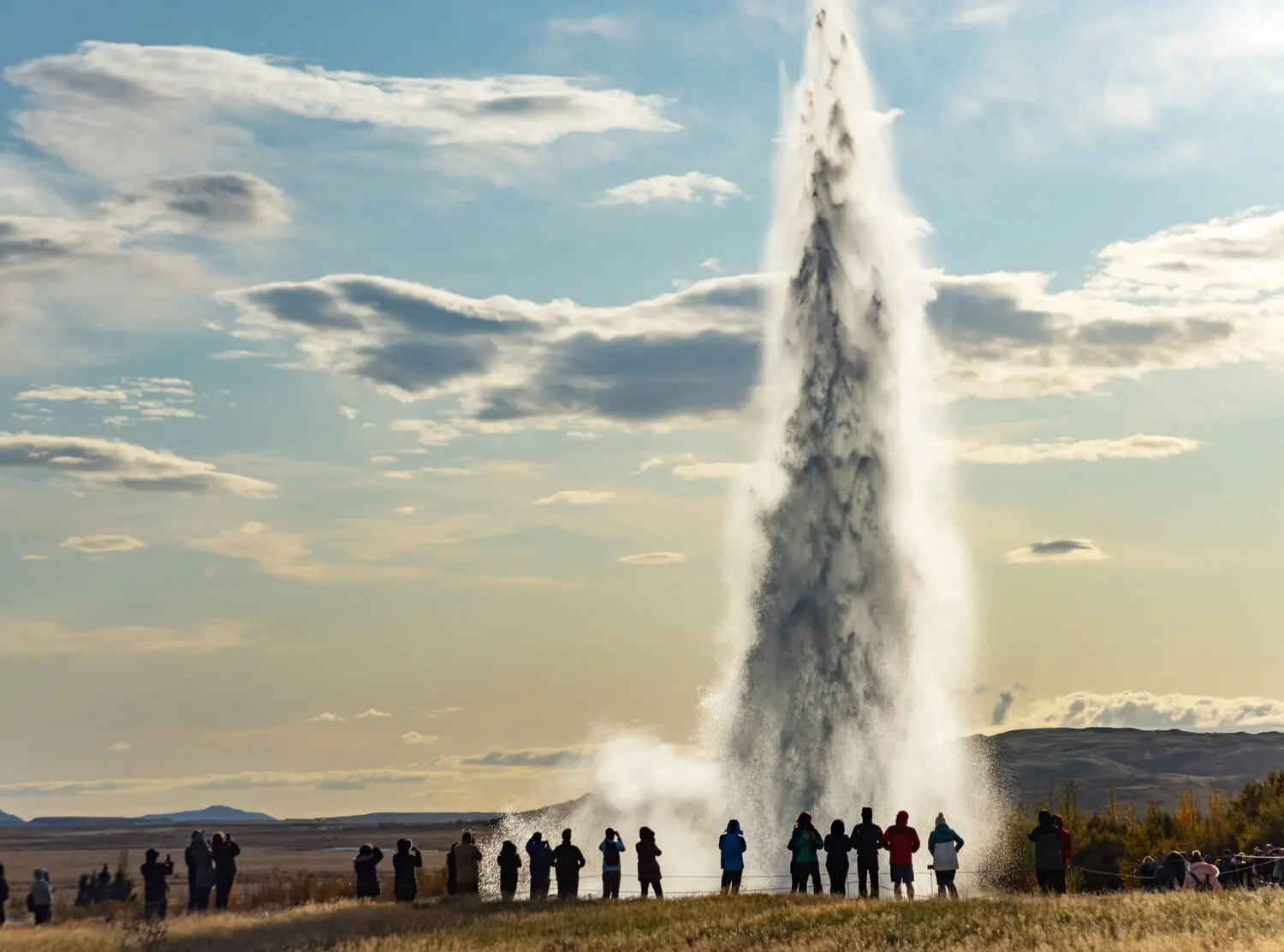
The Great Geysir's most spectacular recorded eruption came in 1845, when it reportedly sent water an extraordinary 170 metres into the air — nearly six times the height of the eruptions you'll see from its neighbour today. Its activity has always followed the seismic rhythm of the region, flaring up after major earthquakes in 1630, 1789 and 1896, before gradually falling quiet after 1916. The spring simply grew too large for the pressure underground to force a full eruption on its own, and attempts to artificially trigger it by altering its bowl in 1935 and 1981 only worked temporarily. It isn't entirely retired — a 2000 earthquake briefly woke it again — but for now, the reliable performer of Haukadalur is Strokkur, just a short walk away, going off every five to ten minutes and throwing boiling water 20 to 30 metres into the sky.
Bought, Sold, and Finally Protected
For a natural wonder, the Great Geysir has had a surprisingly ordinary paper trail. In 1894, an Irish traveller named James Craig bought the land containing Geysir, Strokkur and the smaller Litli-Geysir for 3,000 kronur, later passing it on to a friend. In 1935, a farmer named Sigurður Jónsson acquired the site and, rather than keeping it private, donated it to the Icelandic state, opening it to public visitors for the first time. It took until 2020 for the whole geothermal area to receive formal legal protection — fittingly announced on 17 June, Iceland's national holiday.
The Valley's Own Troll
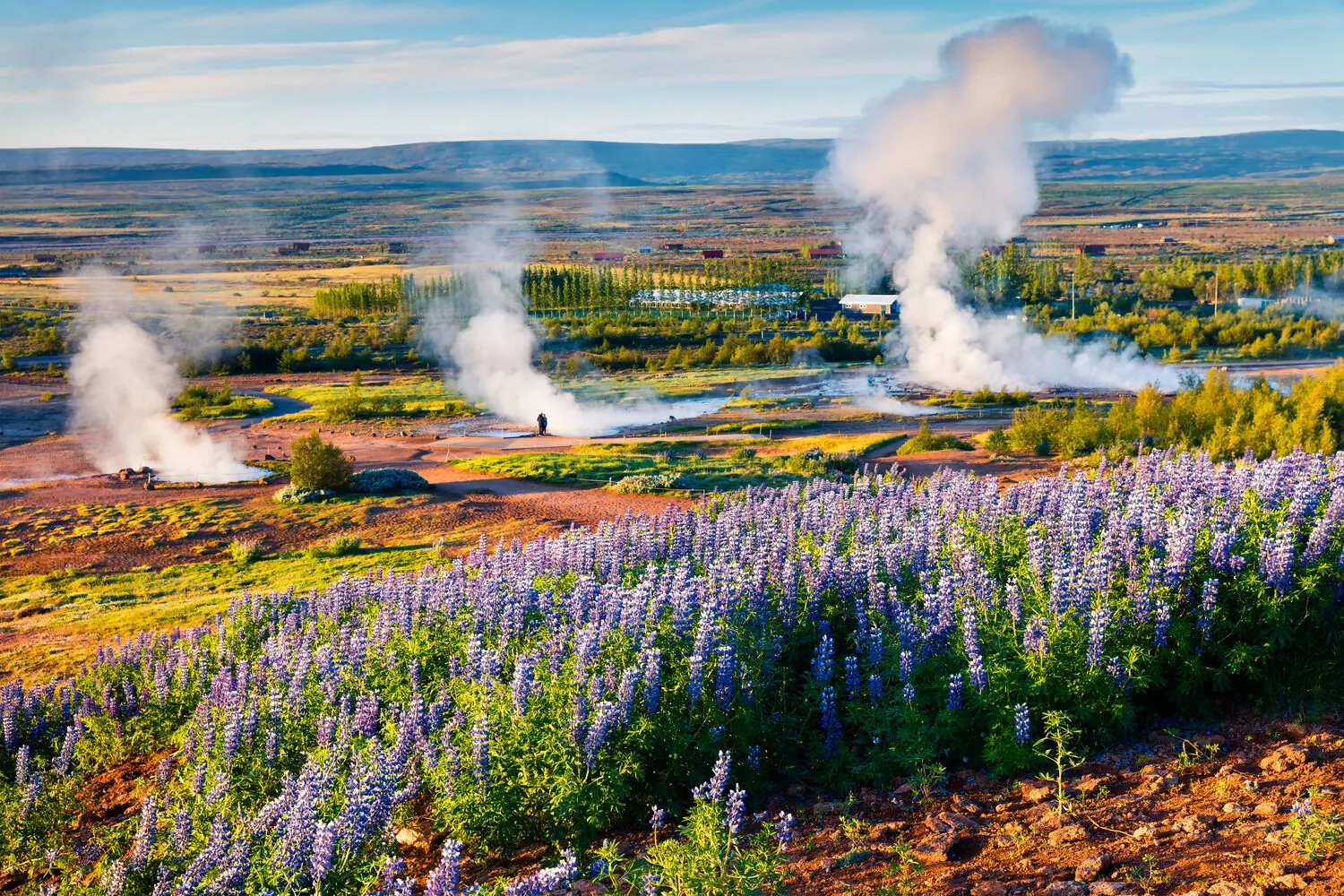
Haukadalur has a folklore all its own, even if it doesn't revolve around the spring itself. Local legend tells of Bergþór, an unusually gentle troll who lived in a cave on nearby Bláfell mountain — skilled, the story goes, in a bit of quiet magic, and kinder than trolls are generally given credit for. On his deathbed, Bergþór asked a Haukadalur farmer for one favour: to be buried somewhere he could still hear church bells and running water. In exchange, he promised the farmer whatever was in the kettle by his bed. When the farmer's servants finally found Bergþór's body, the kettle held nothing but dead leaves — a disappointing inheritance, until one man who'd absent-mindedly stuffed a handful into his gloves found them turned to gold coins by the time he reached the bottom of the mountain. True to his wish, Bergþór was buried in the Haukadalur churchyard, in a spot still known today as Bergþórsleiði — Bergþór's Mound — a quiet local footnote to a valley more famous for what erupts out of the ground than what folklore says is buried in it.
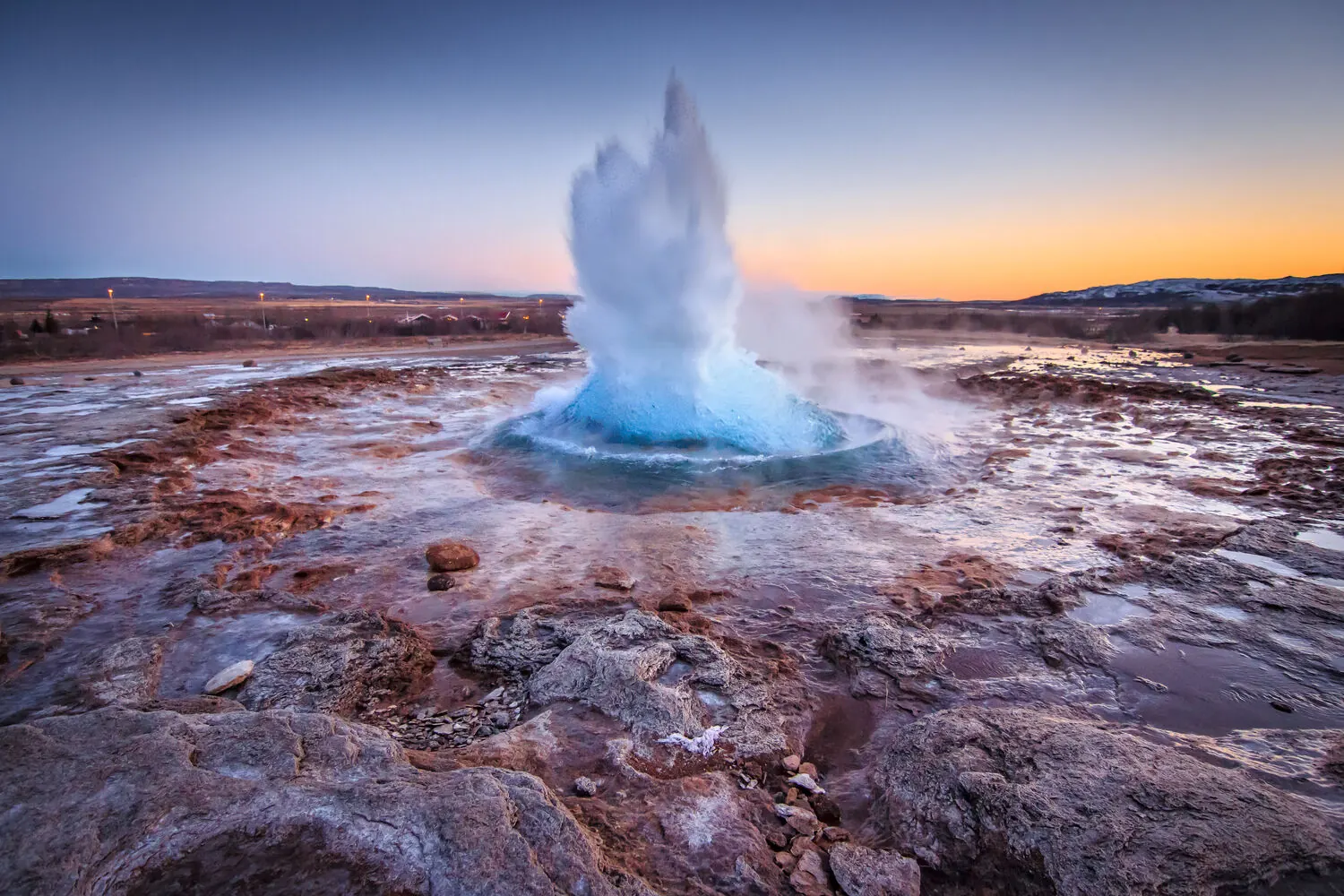
A spring quiet enough today to nap through an earthquake, having once given the whole world a word.
Small Facts Worth Knowing
- Every geyser on earth is named after this one— "geysir" comes from the Icelandic verb geysa, to gush, and English simply borrowed it wholesale.
- The Great Geysir's shaft runs about 20 metres deep — roughly 2 metres wide, lined with silica sinter (geyserite) deposited by centuries of mineral-rich water.
- Its best-ever recorded eruption reached 170 metres— in 1845, nearly six times higher than Strokkur's eruptions today.
- It was privately owned for over 40 years — bought by an Irishman in 1894, then gifted to the Icelandic state in 1935.
- Strokkur erupts every 5 to 10 minutes — sending water 20 to 30 metres into the air, making it one of the most reliable geysers to watch anywhere.
- The whole area was formally protected only in 2020— on Iceland's national holiday, 17 June, a fitting date for the site that gave the world its word for this phenomenon.
Before You Go
Strokkur is worth more than a single photo — the water visibly domes upward for a second or two before it erupts, which is your cue to already have the camera up rather than reacting after the fact. Stand slightly off to the side rather than directly downwind; the spray carries further than it looks, and the water is genuinely boiling. The whole geothermal area is small enough to walk in twenty unhurried minutes, so there is rarely a reason to rush between one eruption and the next.
Geysir Is the Second Stop on Our Golden Circle
Our Golden Circle Tour times the visit for a good run of Strokkur eruptions, right between Þingvellir and Gullfoss.
See the Golden Circle Tour →