Skógafoss: The Waterfall Guarding a Viking's Gold
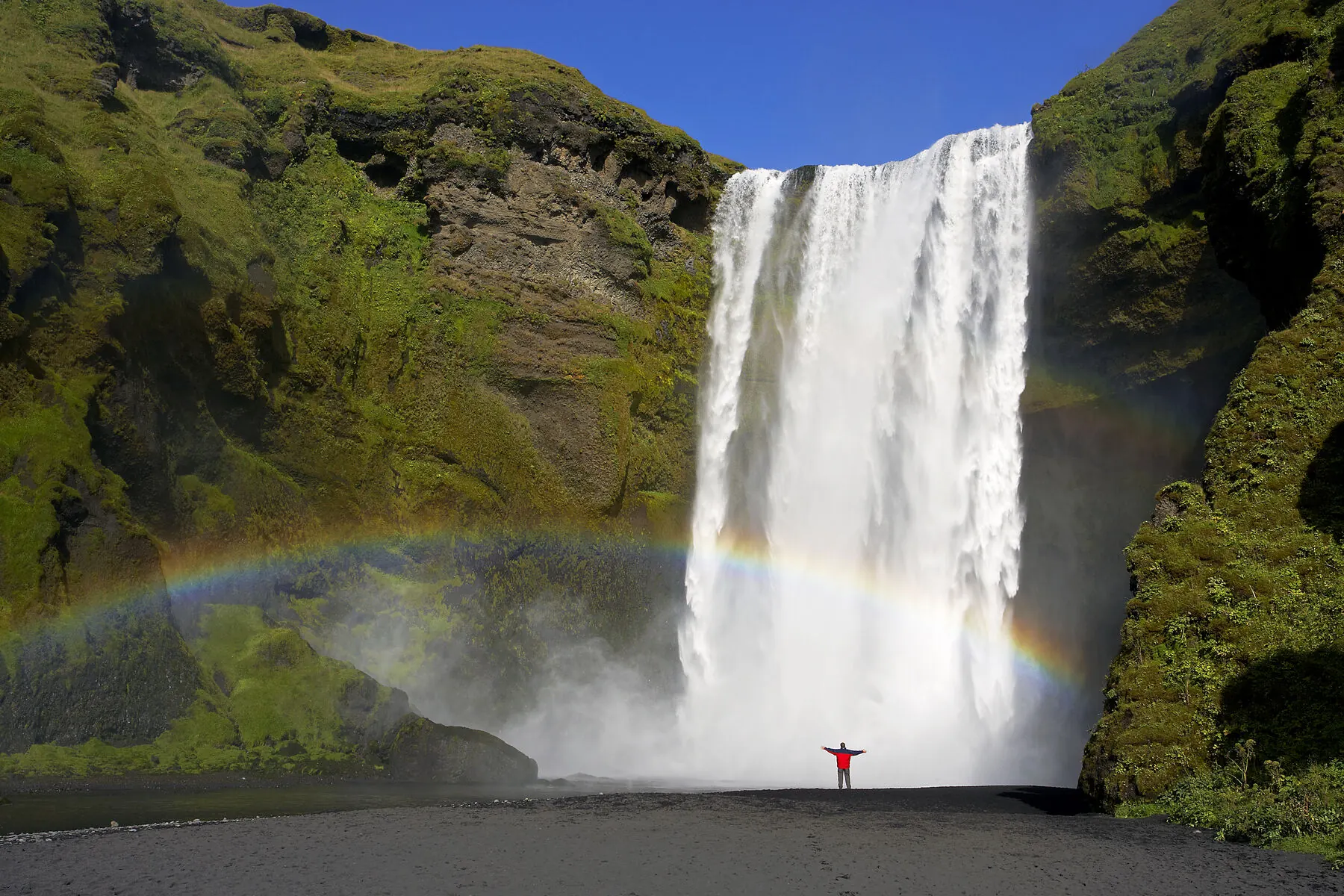
Skógafoss doesn't need a walking path behind it or a hidden gorge to impress — it simply pours 60 metres straight down, 25 metres wide, throwing up so much spray that rainbows show up on almost any sunny visit. It's one of Iceland's biggest waterfalls by volume, and, according to local legend, one of its best-guarded — supposedly sitting on top of a Viking settler's hidden gold.
A Wall of Water, Not a Ribbon
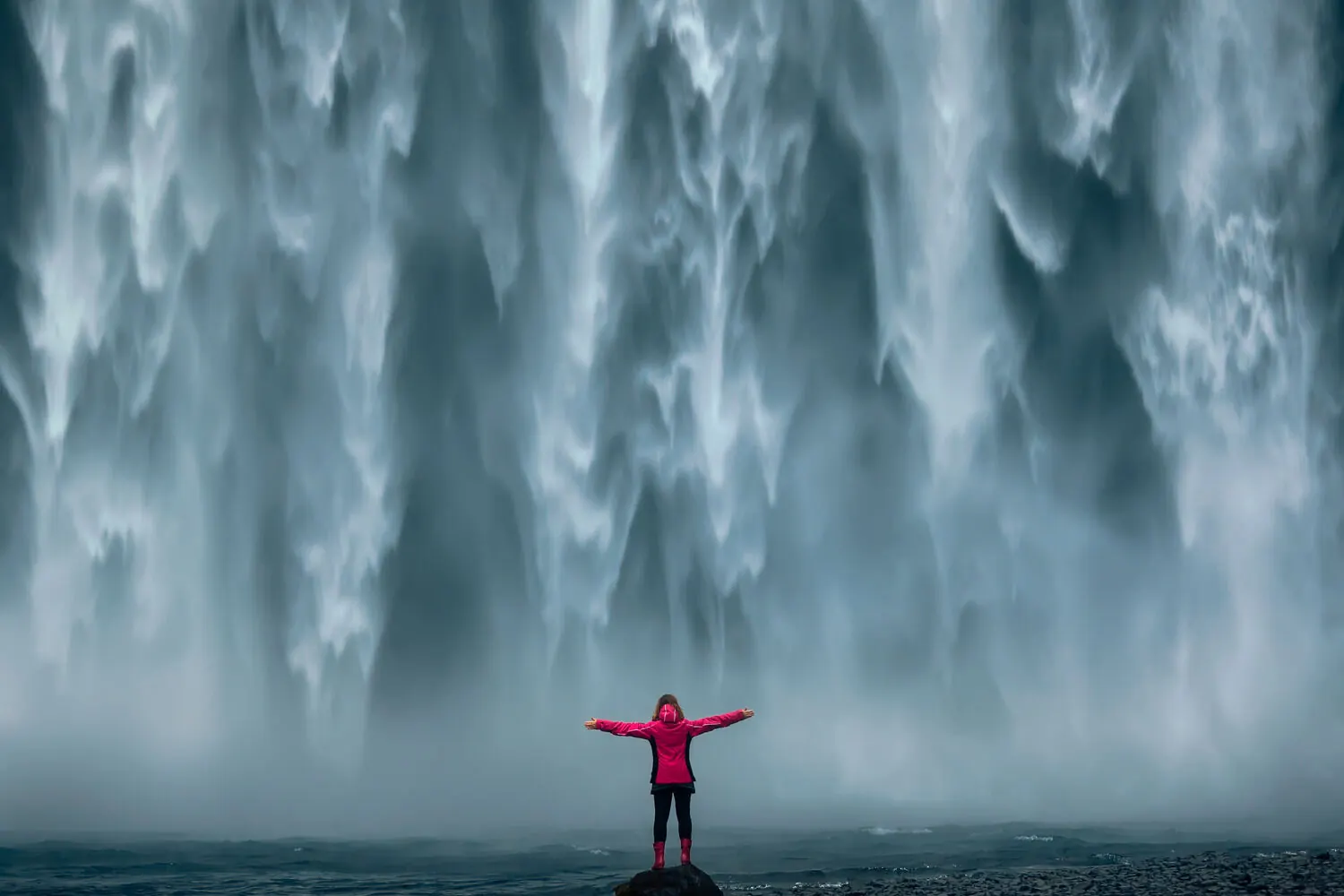
Where many of Iceland's famous waterfalls are narrow, dramatic ribbons, Skógafoss is closer to a wall — a full 25 metres wide, dropping a sheer 60 metres onto the rocks below. Like its neighbour Seljalandsfoss a short drive west, it marks the line of Iceland's ancient coastline, from back when the sea reached this far inland before retreating over the centuries. The sheer volume of water moving over the edge means the spray zone extends well out into the open field in front of the falls, which is exactly why rainbows appear here so reliably on clear days — sometimes doubled, arcing across almost the entire width of the falls at once.
The Treasure Behind the Falls
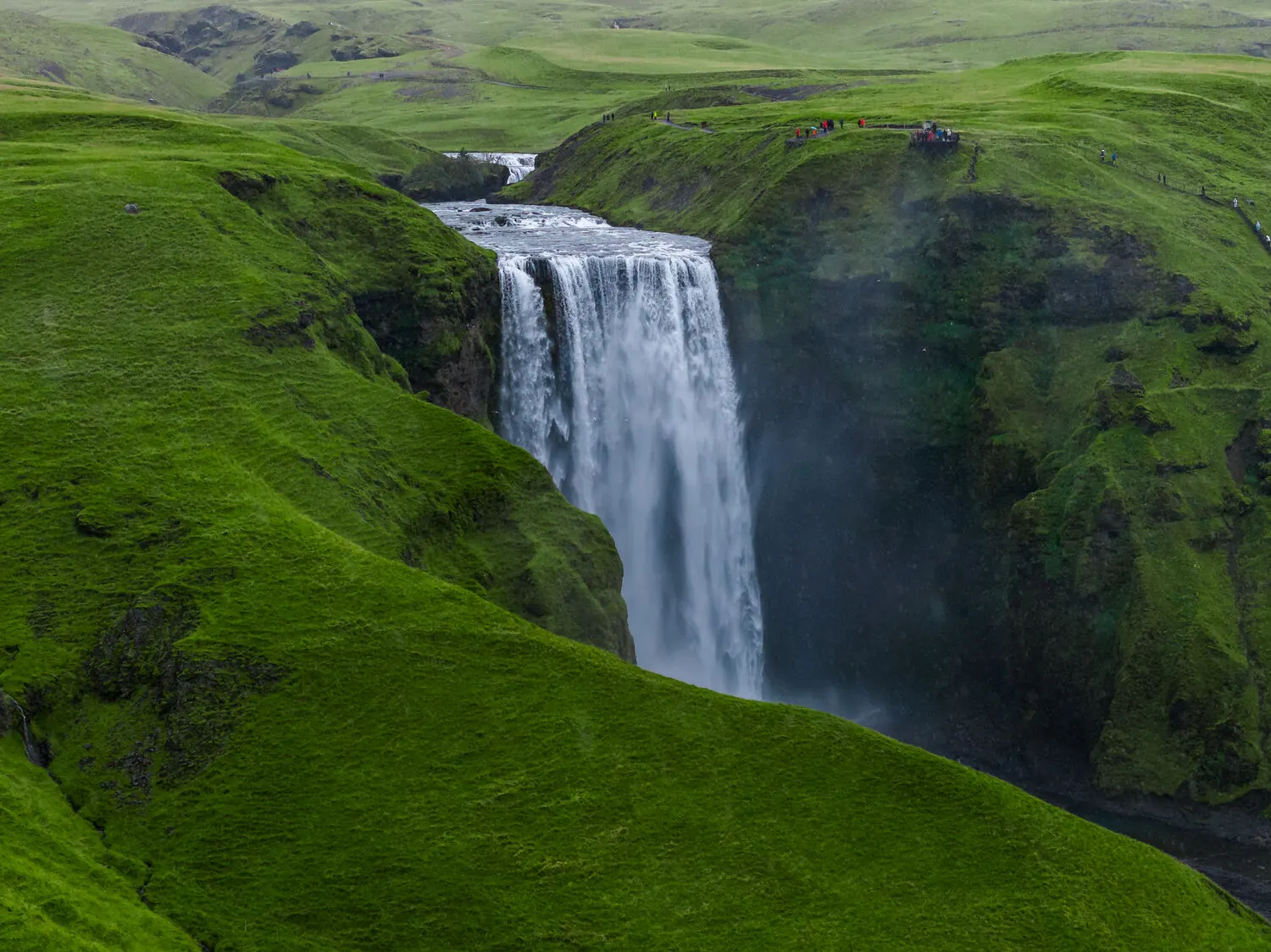
Local legend gives Skógafoss its own piece of Viking-age drama. The story goes that Þrasi Þórólfsson, one of the first Norse settlers in the area around 900 AD, buried a chest of gold in a cave directly behind the falls before he died. Þrasi is also said to have quarrelled bitterly with his neighbour, Loðmundur, over rights to the nearby Fúlilækur river — a dispute that, in most versions of the tale, was eventually settled peacefully between the two men. Generations later, locals are said to have spotted the chest glinting behind the curtain of water and made several attempts to retrieve it. In one telling, three men managed to fix a rope to a ring on the chest, only for the ring to snap off as they pulled — supposedly the very ring now on display at the Skógar Folk Museum, a short walk from the falls. The rest of the treasure, if it's there at all, has never been found.
Above the Falls, and Beyond
A staircase of more than 400 steps climbs the hillside beside Skógafoss to a platform looking straight down over the edge — a genuinely different view from the crowd-level one below, and usually far less crowded itself. For hikers with more time, the same trail continues into the Fimmvörðuháls route, a multi-day path that threads between two glaciers and past dozens of smaller waterfalls on its way toward Þórsmörk. Most visitors never go further than the first viewing platform, and that's more than enough to earn the climb.
A wall of water wide enough to throw its own rainbow, guarding a treasure no one has ever quite found.
Small Facts Worth Knowing
- Skógafoss drops about 60 metres and spans 25 metres wide — one of the largest waterfalls in Iceland by sheer volume of water moving over the edge.
- It marks the old coastline, like Seljalandsfoss — both falls sit along the same cliff line left behind as the sea retreated from this stretch of the South Coast.
- Rainbows appear here on almost any sunny day — the sheer volume of spray thrown off the falls makes single, and sometimes double, rainbows unusually reliable.
- A steep staircase of 400-plus steps climbs beside the falls — leading to a viewing platform above, and onward to the multi-day Fimmvörðuháls hiking trail.
- Local legend says a Viking's treasure chest is still hidden behind the falls — and a ring supposedly recovered from it is on display at the nearby Skógar Museum.
- The name comes from the woodland once nearby— skógur means "forest" in Icelandic, a reminder that this now-treeless coastline looked different centuries ago.
Before You Go
If the sun is out, get as close to the base as you're comfortable with — that's where the rainbows are brightest, and also where you'll get soaked, so waterproofs are worth the extra weight in your bag. The staircase is worth the climb even on a short visit, but skip it in high wind, when the upper platform can feel exposed.
Skógafoss Is a Stop on Our South Coast Tour
Our South Coast Tour times the visit for good light, with Seljalandsfoss and Gljúfrabúi the same day.
See the South Coast Tour →