Driving in Iceland: What First-Timers Actually Need to Know
Iceland looks like it was built for a road trip — one ring-shaped highway, dramatic scenery at every turn, and barely any traffic outside Reykjavík. All of that is true. It's also a country where the weather can close a road you drove through an hour ago, where sheep genuinely do not check for cars, and where a rental agreement can quietly exclude the exact terrain you were planning to drive on. None of it is complicated once you know what to expect — this is what actually trips people up, and how to avoid it.
The Ring Road: One Loop, Almost No Way to Get Lost
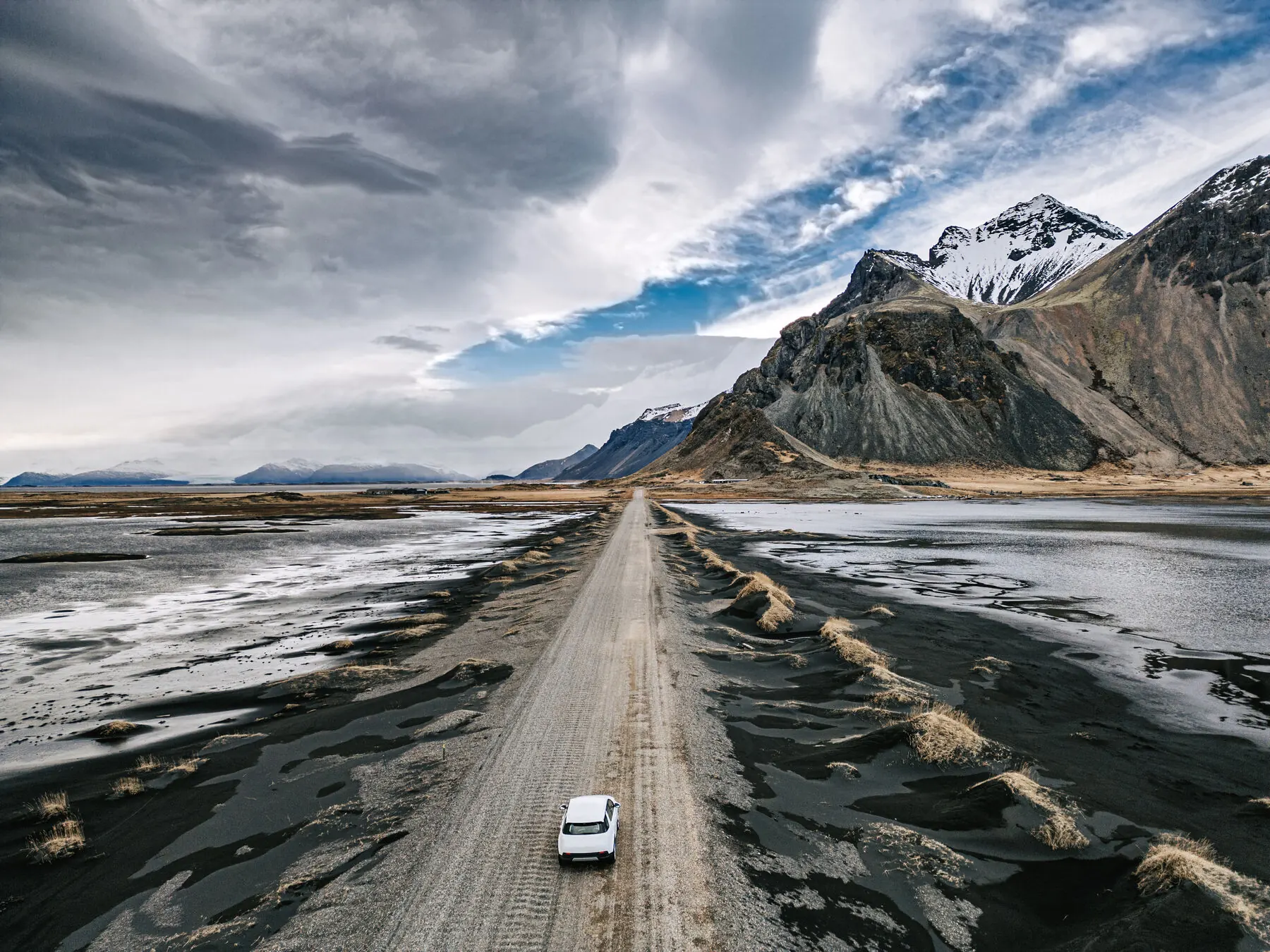
Route 1, better known as the Ring Road, circles the entire country in a single 1,332 km loop, linking Reykjavík to the South Coast, the East Fjords, the North, and back around through the West. It's mostly paved and well maintained, with a handful of remaining gravel stretches, mainly in the east, where the speed limit drops accordingly. Drive it nonstop and it's a 12–13 hour trip; drive it properly — stopping for waterfalls, black sand beaches, and the occasional unplanned coffee — and most visitors give it anywhere from five days to two weeks. There's genuinely only one road to follow, which is either reassuring or slightly unnerving depending on how you feel about commitment.
Rules That Surprise First-Time Visitors
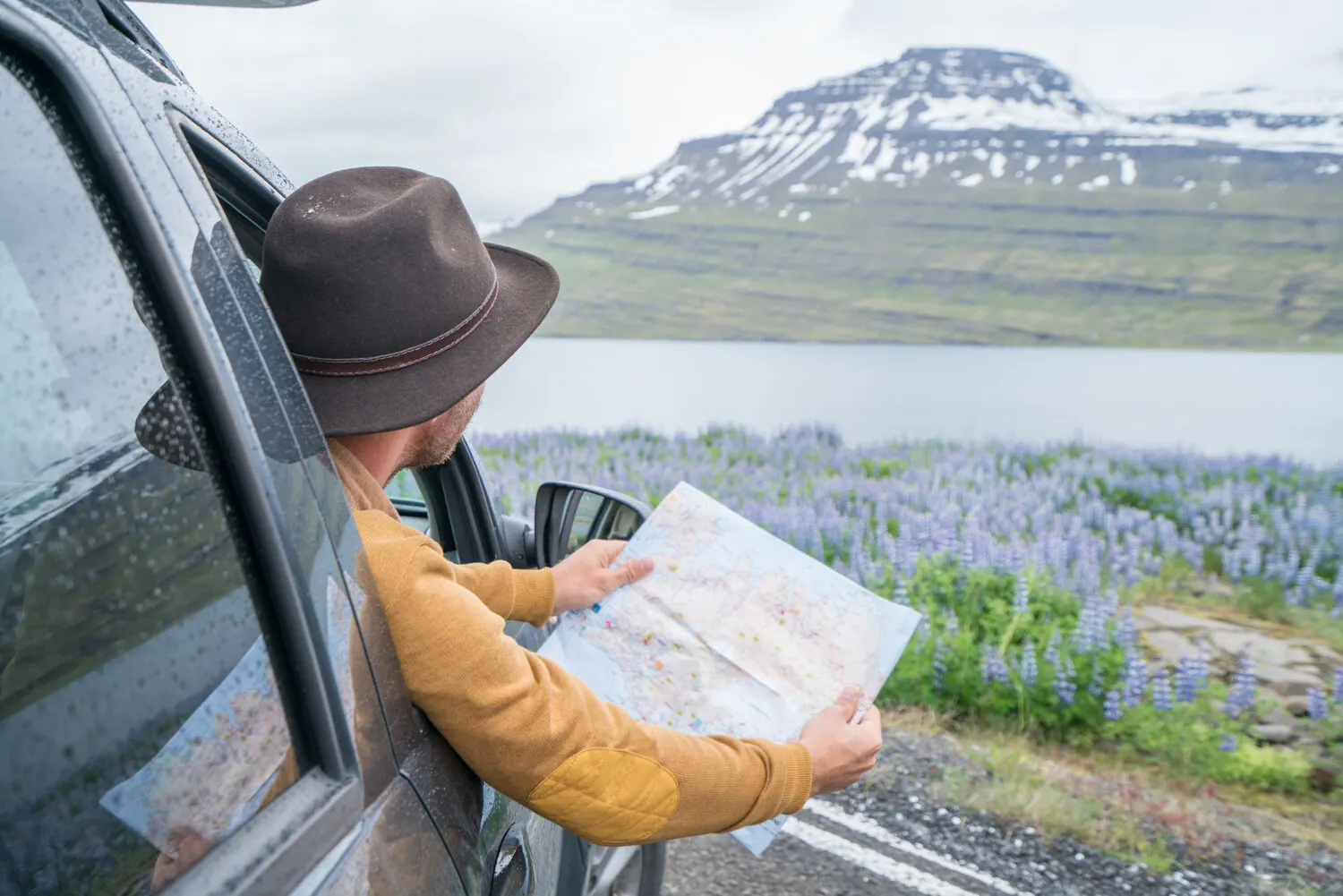
Driving is on the right, same as mainland Europe and the US, which trips up relatively few people. What does catch visitors off guard: headlights are required at all times, day or night, rain or shine — it's law, not a courtesy. Speed limits run 50 km/h through towns, 80 on gravel, and 90 on paved rural roads, and Iceland enforces them with unmarked speed cameras more often than the empty-looking roads suggest. Off-roading — driving on anything that isn't a marked road, including moss-covered lava fields — is illegal and taken seriously; the terrain takes decades to recover from a single set of tire tracks.
Single-Lane Bridges, and the Etiquette Nobody Explains
Secondary routes still cross plenty of one-lane bridges and short tunnels — always marked well ahead of time with a yellow warning sign. The rule is simple: whoever reaches the bridge first has the right of way, and everyone else waits. It sounds obvious until you're the second car and have to actually stop — which, on a narrow bridge with a river underneath, feels like it should require more ceremony than it does.
Sheep, Swans, and Expecting the Unexpected
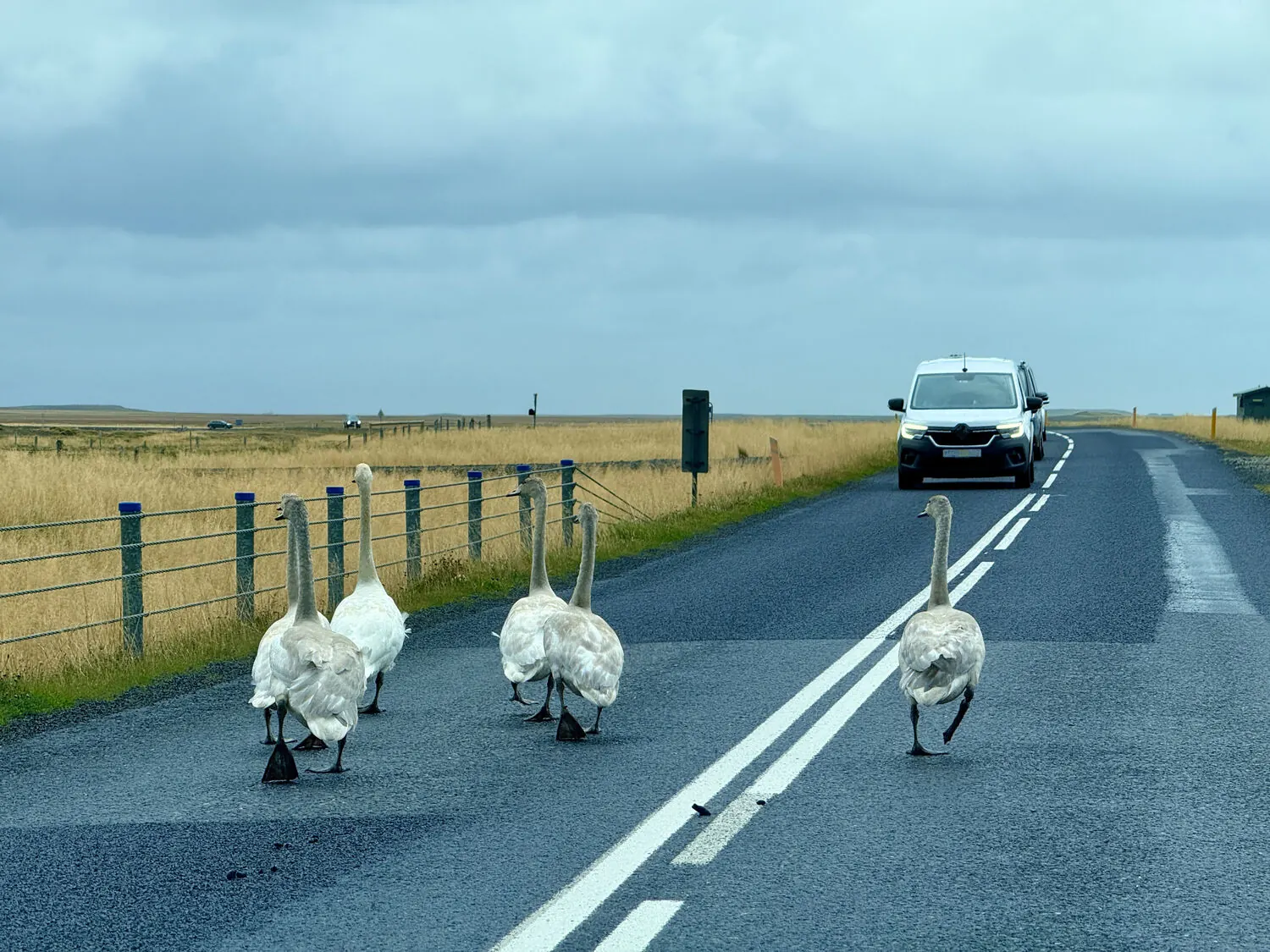
Iceland's roads run straight through open grazing land, and animals do not recognize a highway as a boundary. Sheep are the classic hazard — they wander freely across huge stretches of countryside and will cross without warning, especially in late summer near round-up season. They're not the only ones: swans, geese, and other birds regularly cross roads near lakes and wetlands, unbothered by traffic and in absolutely no hurry. None of this is dangerous if you're driving at a sensible speed and actually watching the road instead of the scenery — which, to be fair, is the hardest part of driving in Iceland.
Gravel, Wind, and Why the Forecast Matters More Than the Map
On loose gravel, ease off the speed and give other cars room — a passing vehicle can kick up a rock chip or, worse, a blinding cloud of dust at the wrong moment. The bigger factor most visitors underestimate is wind: sudden crosswinds strong enough to push a car sideways or rip a door off its hinges are common enough that rental agreements specifically warn about the latter. Iceland's weather can also shift a road from clear to closed within hours, and Google Maps won't reliably reflect that. The real sources are road.is for real-time conditions and closures, and safetravel.is for weather and travel alerts — both worth checking the morning of, not just the night before.
F-Roads: Spectacular, and Not for Every Rental Car
Roads marked with an "F" — short for fjalla, mountain — lead into Iceland's highland interior, and they're a different category of driving altogether: unpaved, often unbridged river crossings, and legally restricted to 4x4 vehicles. They typically open sometime between mid-June and early October, shifting year to year with snowmelt, and close again the moment conditions turn. Standard rental insurance frequently excludes damage from river crossings or sand and ash storms, so it's worth checking the fine print before treating an F-road as just another route on the map. For most first-time visitors sticking to the Ring Road and its paved connectors, none of this comes into play — but it's worth knowing before a GPS route casually suggests one.
The road is rarely the problem in Iceland. The weather deciding to change its mind is.
Small Facts Worth Knowing
- The Ring Road (Route 1) is about 1,332 km — a full loop of the country, technically driveable in 12–13 hours nonstop, though most visitors take 7–10 days to actually stop for anything.
- Headlights stay on at all times, day and night — it's the law, not a suggestion, and one of the first things that catches first-time renters off guard.
- Speed limits are 50 km/h in towns, 80 on gravel, 90 on paved rural roads — gravel roads drop the limit because loose surfaces genuinely need it.
- On a one-lane bridge, whoever reaches it first has the right of way — there are still hundreds of these on secondary routes, always marked well in advance.
- "F" in an F-road stands for fjalla — mountain — these highland routes are legally 4x4-only, and standard rental insurance typically won't cover river-crossing or undercarriage damage on them.
- F-roads are usually only open mid-June to early October — exact dates shift every year with snowmelt, and road.is is the place to check before committing to a route.
- You can register your travel plan for free with the 112 Iceland app — search-and-rescue teams can see it if you don't check back in, which matters most on remote or highland routes.
- A 2WD car is genuinely fine for a summer Ring Road trip — 4x4 becomes the sensible choice from roughly October to April, or any time you're leaving paved roads.
Before You Go
Rent a car with confidence for the Ring Road and its paved connecting roads in summer — a 2WD is genuinely enough. Register your route with the free 112 Iceland app if you're heading somewhere remote, check road.is the morning you set off, and always give animals, weather, and one-lane bridges more patience than feels strictly necessary. If self-driving isn't the plan for every day of the trip, that's what guided days are for.
Let Us Handle the Roads, You Handle the Views
Our guided day tours cover the same routes — one-lane bridges, sheep, and all — with a local driver-guide who already knows the forecast.
Browse Our Tours →